
Updated on 5/23/25 to include new posts/pictures from an Illinois cannabis industry group on this topic.

In 2023, Illinois joined a growing number of states that decoupled from Section 280E of the federal tax code, allowing licensed cannabis businesses to deduct ordinary business expenses on their state taxes. The change was enacted as part of HB3817, which included a few other cannabis-related provisions.
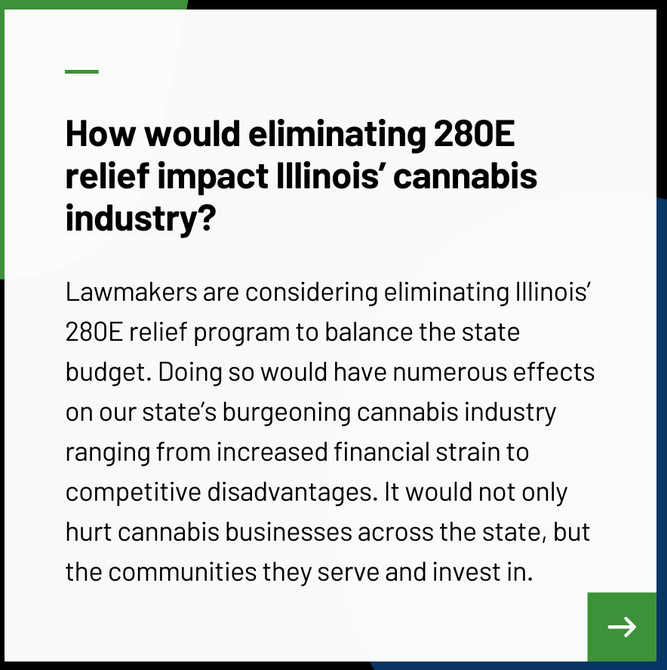
Now, according to the Cannabis Business Association of Illinois (CBAI), lawmakers are considering reversing that relief to help balance the state budget.
“In 2023, the Illinois General Assembly passed legislation to give cannabis businesses relief from Section 280E — a federal tax rule that prevents them from deducting ordinary business expenses. Now, lawmakers are considering eliminating this crucial support to help balance the state budget.”

In the social media post, the Cannabis Business Association of Illinois urged individuals to contact their lawmakers now via this link: https://thevirtualcitizen.com/cbail_280e/.
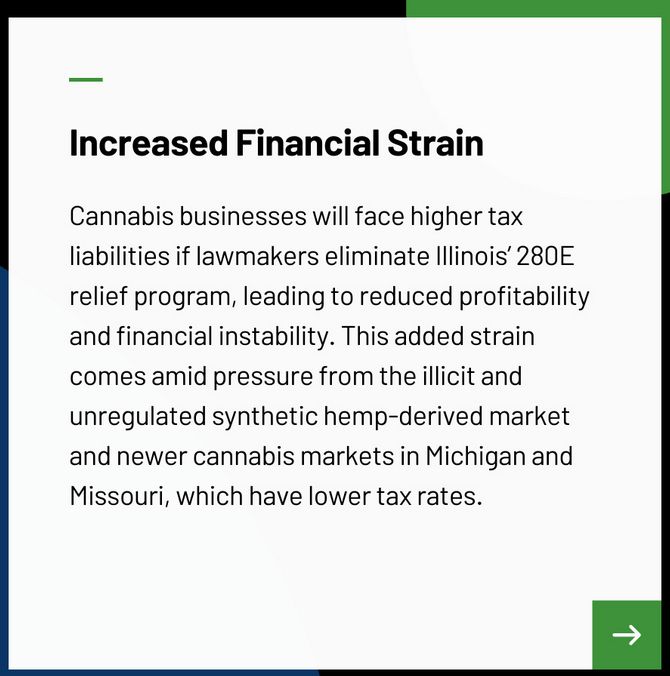
In the past, CBAI has stated that “Not allowing these deductions will have a severe financial impact on new cannabis businesses and will negatively impact the ability to achieve profitability in the first and second years of operations. The inability to deduct these expenses can make the effective tax rate on dispensaries more than 70%.”
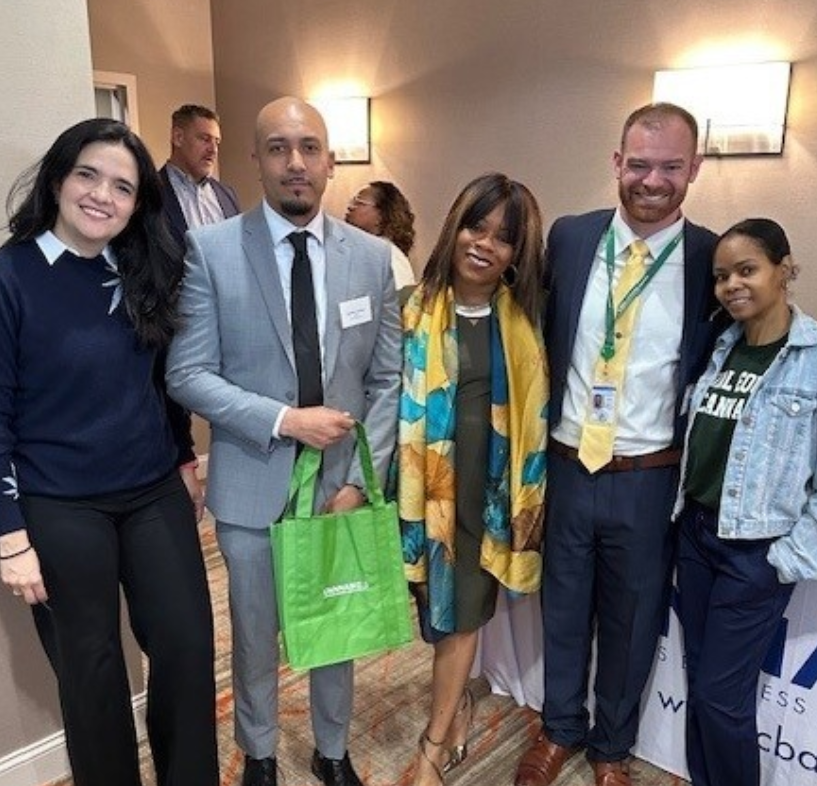
New post by Cannabis Business Association of Illinois
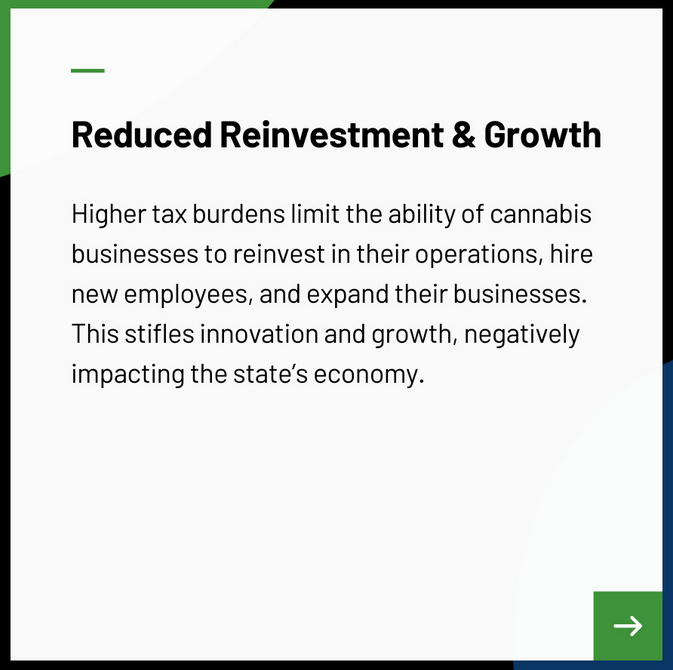
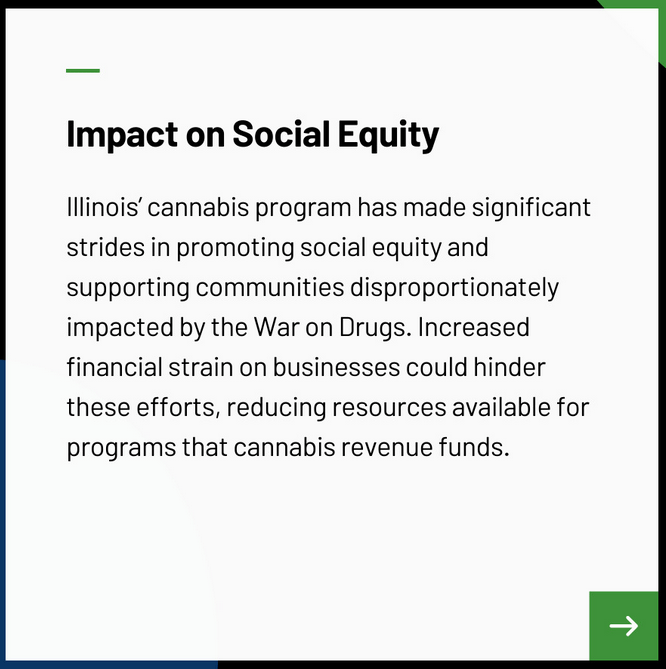
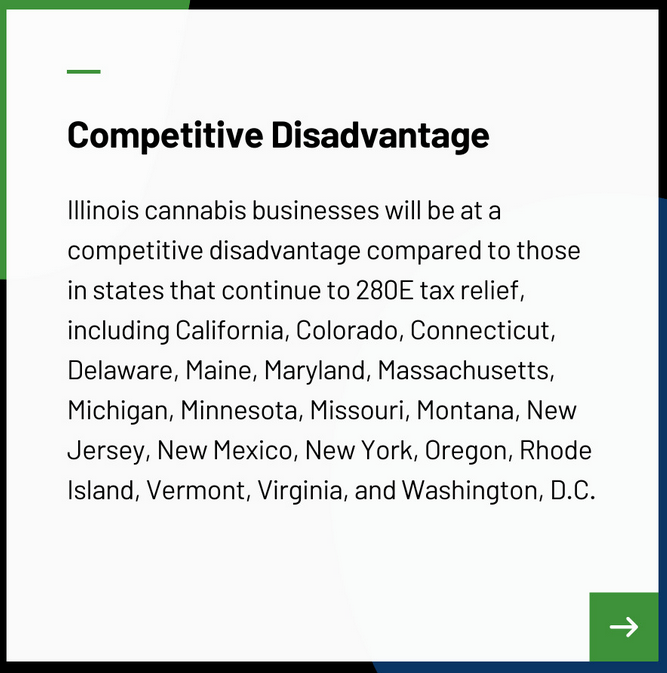
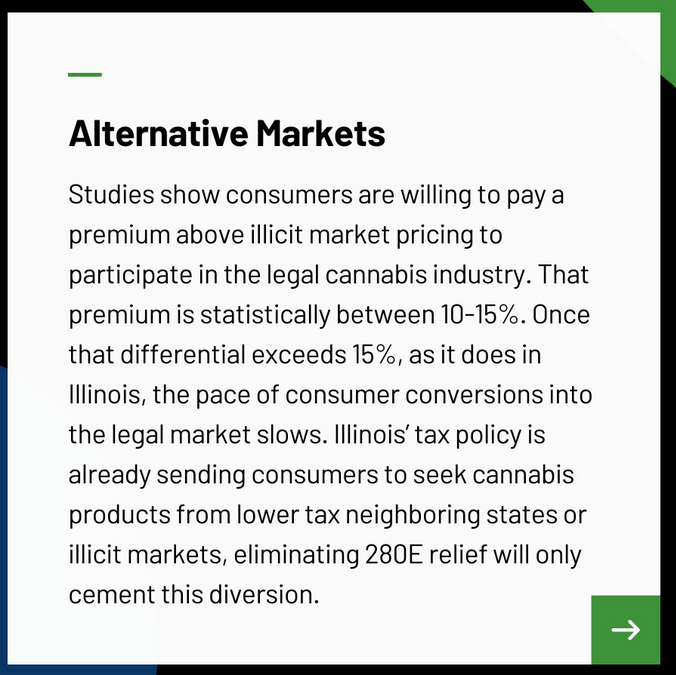
On 5/23/25, the Illinois Cannabis Business Association of Illinois (CBAI) made a new post on this subject. The graphics that they shared are below.



Other cannabis-related changes included in HB3817
Below is a recap of other cannabis-related changes included in HB3817.
Cannabis Policy Highlights from HB3817 – Click to expand for more details.
HB3817 also directed a $40 million transfer from the Compassionate Use of Medical Cannabis Fund to the Cannabis Business Development Fund to support cannabis business growth and equity initiatives.
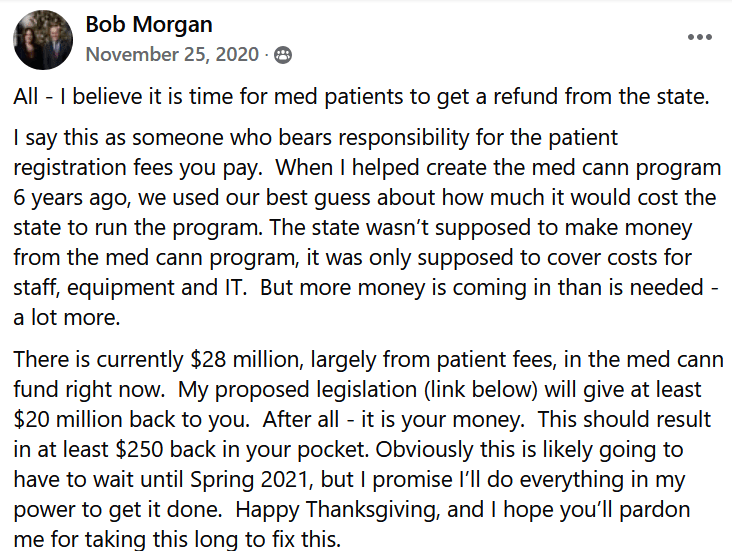
Before this transfer occurred, Illinois Representative Bob Morgan publicly acknowledged that the state’s medical cannabis program had generated more revenue than needed—largely from patient registration fees. In a 2020 statement, Morgan said, “The state wasn’t supposed to make money from the med[ical] cann[abis] program, it was only supposed to cover costs for staff, equipment and IT. But more money is coming in than is needed—a lot more.”
At the time, he proposed legislation to return at least $20 million to registered medical cannabis patients, noting the fund had accumulated $28 million, mostly from those fees. “It is your money,” he wrote, estimating refunds could amount to at least $250 per patient.
That refund proposal has not come to fruition, and to my knowledge, it has not been discussed publicly since.
The legislation also extended the deadline for Conditional Adult Use Dispensing Organization Licensees to secure a location—from 180 days to 720 days—within the BLS Region where their license was issued.
Highlights of Cannabis Policy Changes Over the Years
Below is an abbreviated recap of some of the cannabis policy progress that Illinois has made over the years.
Cannabis Policy Highlights in Illinois – Click to expand for more details.
- In August 2013, Governor Patrick Quinn signed into law the state’s medical marijuana program. The law was set to last for 4 years and was referred to as a “pilot program”.
- According to the Chicago Tribune, drafters of Illinois’ law considered it among the toughest in the nation. The legislation prohibited home cultivation, required patients to have an established relationship with a prescribing doctor, and limited eligibility to those with serious or chronic conditions such as cancer, multiple sclerosis, glaucoma, or HIV.
- The law originally required that the Secretary of State added a notation to a registered patient or designated caregiver’s driving record.
- This allowed law enforcement officers to instantly identify whether the driver was a medical cannabis cardholder or a designated caregiver when scanning a license plate.
- Critics argued that this practice violated patient privacy and led to preemptive law enforcement stops based solely on an individual’s cardholder status.
- This allowed law enforcement officers to instantly identify whether the driver was a medical cannabis cardholder or a designated caregiver when scanning a license plate.
- The law required medical cannabis patients to undergo background checks and fingerprinting, which they had to submit to the state of Illinois before receiving final approval to legally purchase and possess limited amounts of cannabis.
- The law created a small & limited number of cultivation centers and dispensaries.
- According to the Chicago Tribune, the measure originally banned licensed growers and dispensaries from donating to political campaigns.
- In May of 2019, Governor Bruce Rauner signed a bill into law which would extend the medical cannabis pilot program to July of 2020 and added post-traumatic stress disorder and terminal illness as qualifying conditions.
- A compromise was made to put the medical advisory board more directly under the governor’s control, giving the state Department of Public Health director more input over whether to approve any new conditions.
- Under Bruce Rauner’s leadership, the director of IDPH rejected every new condition proposed by the advisory board.
- A compromise was made to put the medical advisory board more directly under the governor’s control, giving the state Department of Public Health director more input over whether to approve any new conditions.
- In August of 2016, Governor Bruce Rauner signed a bill into law which decriminalized small amounts of cannabis.
- Under the new law, possession of 10 grams of marijuana or less is punishable by fines ranging from $100 to $200, rather than jail time. Previously, Illinois law classified possession of up to 10 grams as a Class B misdemeanor, carrying penalties of up to six months in jail and fines of up to $1,500.
- Created a per-se limit for cannabis.
- A lawmaker revealed that they “literally made up” the per-se limit for cannabis in Illinois.
- Legal professionals and scientific researchers have argued that there are fundamental flaws in the methodology that is practiced by one of the only labs in the state of Illinois that performs this type of testing in response to the change in the DUI statute
- Note: Months after I exposed the flawed methodology used by one of our state labs, ABC7 and other outlets began reporting similar concerns.
- Legal professionals and scientific researchers have argued that there are fundamental flaws in the methodology that is practiced by one of the only labs in the state of Illinois that performs this type of testing in response to the change in the DUI statute
- Some lawyers have argued that this law provides immunity to medical cannabis patients. I have not been able to independently confirm that.
- A lawmaker revealed that they “literally made up” the per-se limit for cannabis in Illinois.
- In 2018, a bill was signed into law that allows caregivers of minor registered patients to administer medical cannabis on school property.
- In 2019, Governor J.B. Pritzker signed House Bill 2023 into law, expanding Illinois’ medical cannabis program. The bill:
- Made the Medical Cannabis Pilot Program (MCPP) and OAPP permanent, ensuring long-term access for patients.
- Removed the word “tamper-evident” from the cannabis container language
- Some law enforcement officers were causing issues for cannabis consumers over “broken seals” on cannabis packaging. This change clarified that cannabis is no longer treated as a “one-way” product. In other words, as long as your cannabis was in a sealed, child-proof, and odor-proof container you should be in compliance with the law.
- Required the Department of Financial and Professional Regulation to adopt rules allowing returns and potential refunds for damaged or inadequate products.
- Established the Opioid Alternative Pilot Program (OAPP) to provide an alternative treatment path for chronic pain patients.
- Allowed provisional access to dispensaries for medical cannabis patient applicants.
- Removed fingerprinting requirements and eliminated disqualifying criminal offenses for applicants.
- Prohibited organizations from charging fees to assist patients with medical cannabis applications.
- Allowed veterans receiving medical services at VA facilities to participate in the OAPP.
- Expanded the list of healthcare professionals who can certify medical cannabis use to include Physician Assistants (PAs), Advanced Practice Nurses (APNs), and Nurse Practitioners (NPs).
- Added new qualifying conditions, including autism, chronic pain, irritable bowel syndrome, migraines, osteoarthritis, anorexia nervosa, Ehlers-Danlos Syndrome, Neuro-Bechet’s Autoimmune Disease, neuropathy, polycystic kidney disease, superior canal dehiscence syndrome, and expanded Crohn’s disease to include ulcerative colitis.
- Allowed patients to designate up to three caregivers, providing greater flexibility for both adult and minor patients.
- Required immediate dispensary changes for MCPP patients.
- Previously, patients were limited to shopping at a single dispensary, and switching dispensaries involved a lengthy process that could take over a week to complete.
- With this change, patients were still required to register with a dispensary, but the process became electronic, significantly reducing the time needed for completion.
- In 2019, Governor Pritzker signed SB0455 into law. The law allowed a nurse or school administrator to administer medical cannabis products and allows students to self-administer under the direct supervision of a school nurse or school administrator.
- In June of 2019, Governor Pritzker signed HB1438 into law. The bill:
- Allowed registered medical cannabis patients to grow up to five cannabis plants for personal use.
- Decriminalized the possession of small amounts of cannabis for all adults.
- Established a new offense for the improper possession of cannabis. If cannabis is not stored in a sealed, child-proof, and odor-proof container, it is considered a Class A misdemeanor, punishable by fines and up to one year in prison.
- Reminder: Between 2016 and 2019, possessing cannabis in a motor vehicle was only a citable offense. HB1438 created new criminal penalties for simple possession of cannabis in Illinois.
- Legal professionals on The Cole Memo Podcast have argued that this language was influenced by law enforcement, who benefit from using it to bypass Fourth Amendment protections and search the vehicles of cannabis users.
- Reminder: Between 2016 and 2019, possessing cannabis in a motor vehicle was only a citable offense. HB1438 created new criminal penalties for simple possession of cannabis in Illinois.
- Permitted adults aged 21 and older to purchase small amounts of cannabis from a limited and tightly controlled number of dispensaries.
- Did not repeal any of the criminal penalties established under the Cannabis Control Act of 1978.
- In December of 2019, Governor Pritzker signed SB1557 into law. The bill:
- Required the Secretary of State to remove all notations from driving records indicating that a person is a registered medical cannabis patient or caregiver within six months of the bill’s effective date.
- Allowed local governments, including both home rule and non-home rule counties (in unincorporated areas), to permit on-premises cannabis consumption at dispensaries or retail tobacco stores within their jurisdiction, as long as it complies with state law.
- Provided that cannabis and cannabis-derived products regulated under the Industrial Hemp Act are not subject to the rules of this Act.
- In August of 2021, Governor Pritzker signed HB1443 into law. CROO released this fact sheet on HB1443. The bill:
- Redefined “cannabis container” to include the term “resealable,” strengthening the language to protect consumers from law enforcement actions targeting individuals for “breaking the seal” on their cannabis containers.
- Eliminated the requirement for medical patients to register with a specific dispensary, allowing them to purchase from any medical dispensary in Illinois without needing to update their registration through the state’s online system.
- In December of 2023, Governor Pritzker signed SB1559 / HB3817 into law. The bill:
- Decoupled Illinois from Federal Tax Code Section 280E. This allowed state-licensed cannabis businesses in Illinois to deduct ordinary business expenses on their state taxes, even though these deductions are not allowed under federal law.
- Mandated the transfer of $40 million from the Compassionate Use of Medical Cannabis Fund to the Cannabis Business Development Fund. This transfer was made to provide low-interest loans and grants to social equity applicants, supporting their entry and participation in the cannabis industry.
- Before this had occurred, Illinois Representative Bob Morgan signaled that he would be filing legislation that would have refunded excess money from the Compassionate Use of Medical Cannabis Fund directly to Registered Medical Cannabis Patients.
- This idea has yet to come to fruition.
- Before this had occurred, Illinois Representative Bob Morgan signaled that he would be filing legislation that would have refunded excess money from the Compassionate Use of Medical Cannabis Fund directly to Registered Medical Cannabis Patients.
- Waived annual license fees for existing cannabis transport license holders from January 1, 2024, to January 1, 2027.
- Imposed a moratorium on new cannabis transport license applications, prohibiting the Department of Agriculture from accepting any between January 1, 2023, and January 1, 2027.
- In December of 2024, MarijuanaMoment reported that Female Orgasmic Disorder had officially been approved as a qualifying condition for medical cannabis.
If I missed any major milestones, let me know!
280e Fact Sheet from CBAI
Below is a fact sheet on 280e from CBAI.
Fact sheet on 280e from CBAI – Click to expand to see fact sheet.
The following fact sheet was published in or around March 2023 by CBAI.
Comment below with your thoughts and consider supporting my work!
You can support The Cole Memo with a one-time, monthly, or yearly contribution.
Support The Cole Memo by making a one-time contribution
Support The Cole Memo with monthly contributions
Support The Cole Memo with yearly contributions
Choose an amount
Or enter a custom amount
Your contribution is appreciated. Your contribution helps us afford equipment to capture our content and hosting fees to distribute our content.
Your contribution is appreciated. Your contribution helps us afford equipment to capture our content and hosting fees to distribute our content.
Your contribution is appreciated. Your contribution helps us afford equipment to capture our content and hosting fees to distribute our content.
DonateDonate monthlyDonate yearly
#267 – Illinois updates, federal developments, + Indiana could legalize?! – The Cole Memo
- #267 – Illinois updates, federal developments, + Indiana could legalize?!
- #266 – The UIC Lab Scandal and Cannabis Law Confusion in Illinois
- #265 – Arrested during Michigan Weed Run, Illinois Lawsuits, and a Market Shakeup
- #264 – Cannabis, Congress, and Competition: A Conversation with Stacy McCaskill
- #263 – Talking Movies, Cannabis, and Content Creation with Byron from LostNFaded
 The Cole Memo
Leave a comment