
Earlier last week, I hinted that something interesting might happen on Friday the 13th.
True to form, Governor Pritzker, after a surprise appearance in Paris and nearly three weeks out of the public eye, reemerged alongside cannabis regulators, lawmakers, the CEO of a candy company, and others to announce his support for a bill that critics argue would effectively ban all hemp-derived legal-THC (HDLT) products from being sold anywhere but the small and tightly controlled number of dispensaries in Illinois.
Note: You can listen to the Illinois Hemp Growers Association’s response and fact-check of this press conference by clicking here.
House Bill 4293 initially focused on regulating massage therapists. The original language on massage therapy was removed and replaced with provisions targeting federally-legal cannabis products.
The measure would impose $10,000 daily fines on top of the criminal penalties outlined in the Illinois Cannabis Control Act of 1978 (CCA). In doing so, it would significantly increase penalties for the cultivation, processing, and sale of cannabis flower, concentrates, and infused products.
“These products are often shipped from out of state and are subject to no oversight or testing for biological contaminants or pesticides.”
Governor Pritzker
Senator Kimberly Lightford, the lead sponsor, has confirmed the bill would not affect online sales, leaving out-of-state retailers free to serve Illinois consumers. HB4293 exclusively targets local Illinois businesses.
Reporting has also suggested that HB4293 would even prohibit the retail sale of topical or ingestible CBD products—items popular among pet owners, arthritis sufferers, and those that once provided a lifeline for the now-defunct Family Video stores across Illinois. Governor Pritzker downplayed the impact that this may have during a Q&A with media.

When asked about concerns from critics who argue that HB4293 could criminalize non-intoxicating products and put 10,000 people out of work, Governor Pritzker dismissed the claims, stating, “I don’t put any stock in those claims.” He acknowledged that many stores would lose the ability to sell these products but emphasized that most affected businesses, such as convenience stores and gas stations, are not solely reliant on these sales and “wouldn’t go out of business not selling them.”
- An Attack on Illinois Children
- A Step Back
- Navigating Hemp Policy: What States Should Consider
- Watch Press Conference
- Responses from Industry
- Media Coverage
An Attack on Illinois Children
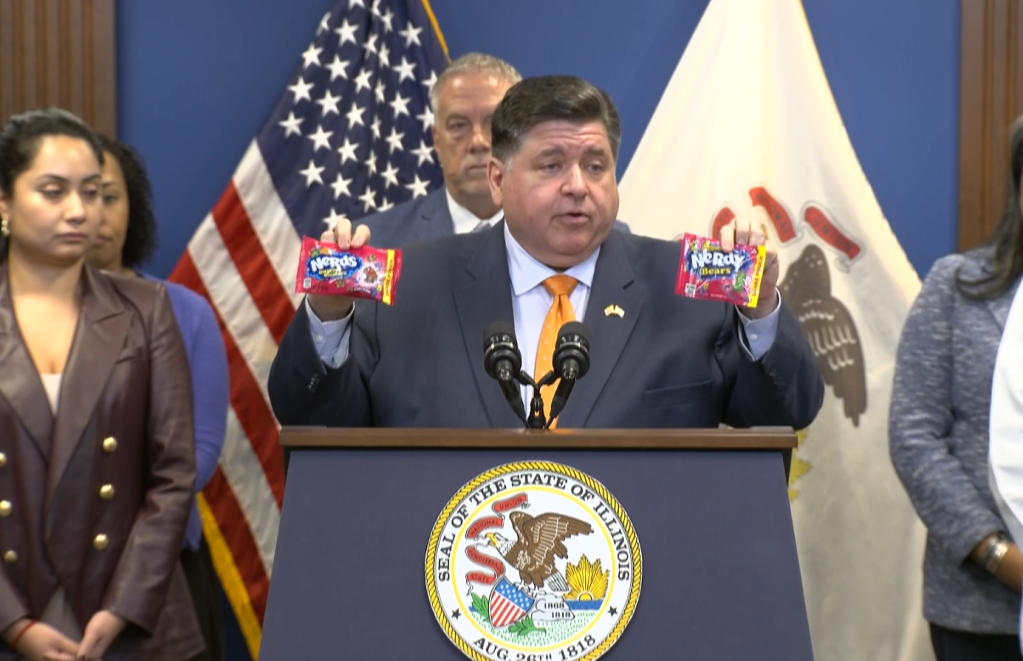
During the press conference, Governor JB Pritzker painted a dire picture of children across Illinois being hospitalized due to “unregulated” hemp-derived products. The Governor’s rhetoric emphasized an urgent need for action, describing hemp products as a public health threat marketed explicitly to minors.
“Children across the state of Illinois are getting sick and they’re being hospitalized, and we can take action to prevent it,”
Governor Pritzker
Throughout his remarks, the Governor repeatedly invoked images of danger: deceptive packaging mimicking popular candy brands, untested products with unknown contaminants, and children as young as two accidentally consuming these items. Pritzker blamed a “legal gray area” for fostering an industry that lacks commitment to child safety and used alarming national poisoning statistics to frame the debate.
Important Context: During the press conference, Governor Pritzker shared a striking statistic: in the past three years, nearly 9,000 cases related to delta-8 were reported to National Poison Control Centers.
Breaking it down, if my math is correct, that averages about 3,000 cases per year across 50 states. Of these, 41% involved individuals under 18, translating to fewer than 1,500 cases annually—roughly 30 cases per state per year.
While proponents like Pritzker argue that HB4293 will bring rogue products under Illinois’ stringent cannabis regulations, critics see a more calculated agenda. This legislation conveniently aligns with the interests of the Illinois cannabis industry.
HB4293, rather than addressing genuine public health concerns, appears to be a reactionary measure aimed at bringing hemp under the same restrictive system that governs marijuana in Illinois.
Restrictive licensing and high pricing have always been a core feature of Illinois’ cannabis policy. Pritzker has candidly acknowledged the economic motivations behind limiting competition in the Illinois cannabis market:
“The reality is that we’ve limited the number of licensees in part because we wanted to make sure that the social equity licensees had a fair shot in the industry and they weren’t just edged out… by having too many dispensaries in the market so that people can’t make money.”
Quote by JB Pritzker
The emergence of hemp-derived cannabinoids, products sold freely in an open market, undermines these goals entirely. By offering accessible, lower-cost products that are “truly identical” outside of the confines of CRTA dispensaries, hemp creates a stark contrast to Illinois’ protectionist cannabis policies.
The question remains: Is this truly about protecting children, or is it about protecting a carefully constructed oligopoly on cannabis sales in Illinois?
Candy is for the Kids?
Ferrara Candy’s CEO raised concerns about Delta-8 products mimicking candy packaging, framing it as a novel threat.
Cannabis-infused products that resemble childhood favorites have been a staple in legal dispensaries for years. From THC-laced gummies to clever remakes of nostalgic products like M&M’s or Reese’s Peanut Butter Cups. The real issue isn’t the products themselves—it’s about access and supervision. If children are consuming these items, it’s not because of colorful packaging alone but because of inadequate oversight.
Setting that aside, in 2021, Mars Wrigley sued cannabis companies for trademark infringement over products like “Skittles,” forcing legal operators to rebrand with names like “Zkittles.” The only reason the market adapted was because licensed operators had clear lines of communication with regulators and a pathway to compliance. When you lock people out of the legal market, as Illinois’ restrictive licensing system does, it becomes far harder to enforce these standards. You can’t effectively regulate a market that you’ve pushed into the shadows, as natural market forces won’t simply disappear.
HB4293 would likely encourage an even larger grey market by doubling down on these barriers, making enforcement even harder. Instead of fueling a shadow market, the focus should be on equitable and accessible licensing to bring all operators into compliance, enabling oversight and consumer safety without driving the problem further underground.
If protecting kids were truly the goal, perhaps we’d promote healthier alternatives—or encourage children to avoid candy and unnecessary sugar altogether.
Pop Quiz:
In the images below, which product contains THC: the one on the left (A), the one on the right (B), or neither?
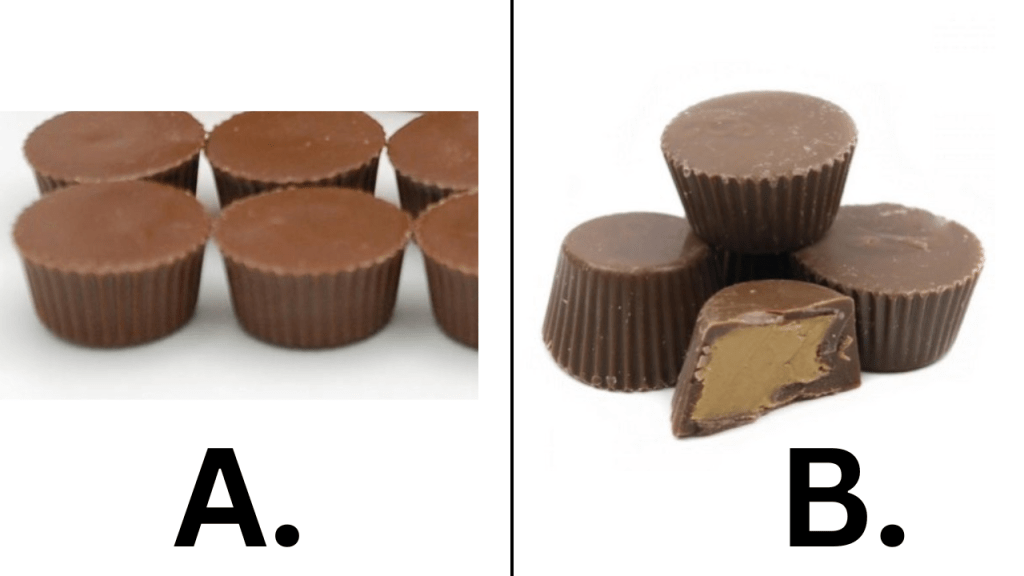
Click to view the answer
I cropped one of the images. Below you can see the answer.


Correct answer: The image on the left(A) was the answer.
The original photo I used in the quiz was a cropped picture of the Caramel Met Cookie Cups by SweetBuzz. This product is sold in Illinois dispensaries.
A Step Back
HB4293 is a major step backward that threatens the accessibility that cannabis consumers have enjoyed with these federally-legal cannabis products.
These products have become staples in a variety of reputable retail spaces, from grocery stores like County Market and corporate liquor stores like Binny’s, to gas stations, bakeries, smoke shops, bars, restaurants, and beyond.
Dispensaries in Illinois remain largely inaccessible. Delivery services are prohibited, despite Governor Pritzker previously expressing support for the idea. Credit cards are not accepted, the number of dispensaries is extremely limited, and Illinois has some of the highest cannabis prices in the nation.
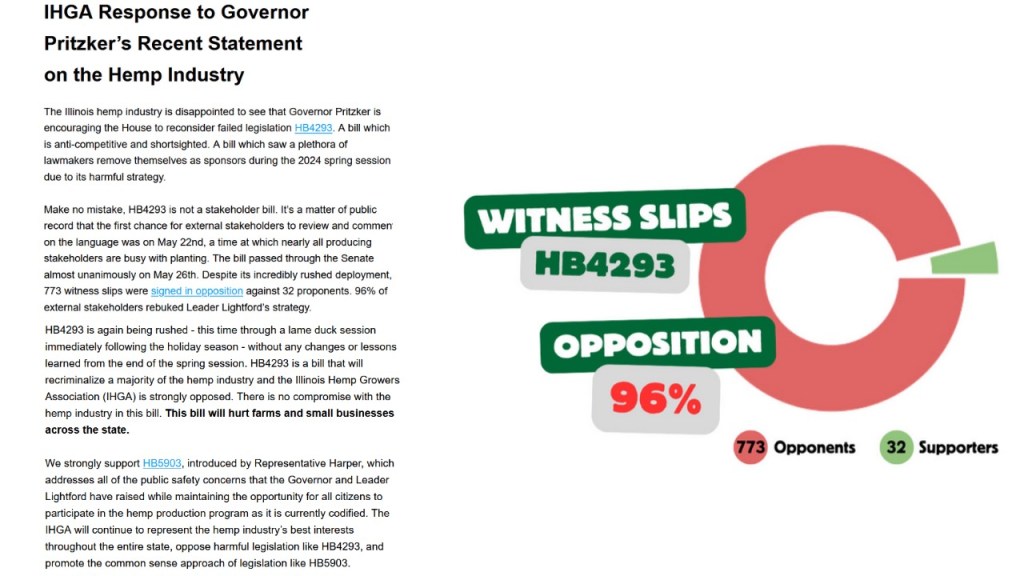
When introduced, HB4293 was widely opposed. On May 23, 2024, the Senate Executive Committee held a hearing on the bill. Witness slips revealed 32 proponents and 773 opponents. In other words, stakeholder feedback showed support for this legislation to be statistically insignificant(meaning proponents made up less than 5% of stakeholder feedback). Click here to view the full list of proponents and opponents.
The Illinois cannabis market is now over a decade old. For many cannabis consumers, the accessibility provided by these federally-legal hemp products has been a refreshing alternative in a state known for its restrictive and overpriced market.
Click to see the large selection of HDLT products at Binny’s Liquor Store
The Continued Criminalization of Cannabis in Illinois
The Cannabis Regulation and Tax Act (CRTA), often described as the law that “legalized” cannabis in Illinois, did little to address the punitive policies of the past. Most cannabis-related penalties under the CCA remain in place and serve as the primary enforcement tool for the legal industry.
Illinois has repurposed the same laws that devastated communities for decades to protect industry profits by targeting the traditional cannabis trade.
Arrests remain concentrated in areas without dispensaries—a pattern documented by the Tribune and reinforced by research from James Swartz, Ph.D., of the University of Illinois Chicago. Swartz’s most recent contribution to Illinois’ annual cannabis report revealed that Chicago communities with the highest arrest rates in 2023-2024 still lack any licensed dispensaries, perpetuating the very inequities cannabis reform was supposed to address.
Prohibition 2.0
Many in and around the industry now credit Illinois with creating “Cannabis 2.0″—or, as some call it, “Prohibition 2.0.”
To maintain high prices, Illinois blocks open participation in the legal cannabis market and relies on criminal penalties to eliminate “competition” from unlicensed operators.
Both the state and the industry seem oblivious—or indifferent—to the fact that these policies continue the very cycle of harm that the Illinois cannabis laws were supposedly designed to address.
In short, Illinois hasn’t fully legalized cannabis. By introducing new penalties through HB4293, the state would only entrench this punitive framework, further harming marginalized communities that have borne the brunt of these policies for decades.
Navigating Hemp Policy: What States Should Consider
I recently wrote a policy paper outlining a path forward for hemp, marijuana, and cannabis. Since its release, two cannabis regulators have personally reached out to share that they found value in my proposal—one of whom currently serves in the state of Illinois.
Currently, only one proposal (mostly) aligns with the standards outlined in my policy paper. HB5903 blends some of the best elements of our existing hemp policy with some of the key aspects of our marijuana policy, all while rejecting the outdated criminal penalties embedded in the CCA.
Rather than perpetuating failed policies that disproportionately impact certain communities, HB5903 empowers the state to address non-compliance through the Illinois Food, Drug, and Cosmetic Act. This would effectively align cannabis regulation with the standards applied to consumable goods.
While proponents of the CRTA initially touted Illinois as a national model for equity, the state’s own disparity study revealed how those promises fell short in the first three years of legalization. By the end of 2023, when the mandated-study concluded, not a single dollar of documented sales had gone to Black or Brown owners. Instead, white male owners accounted for 78% of recreational dispensary sales and a staggering 91% of grower sales.
HB4293 highlights the ongoing conflict between Illinois’ stated goals of equity and the profit-driven motives that dominate its cannabis policies. If the state is to uphold its promises of fairness and accessibility, it must move beyond punitive enforcement and toward frameworks that empower consumers and small businesses alike.
Illinois has the opportunity to chart a new path by rejecting outdated criminal penalties and embracing policies similar to those that have been suggested in HB5903, which prioritize transparency, safety, and genuine equity in the cannabis market.
Watch Press Conference
Read Transcript From Press Conference
Click to read transcript from press conference
Governor JB Pritzker: Good afternoon everyone. We are here today because children across the state of Illinois are getting sick and they’re being hospitalized, and we can take action to prevent it. When we set out to legalize and regulate the cannabis industry here in Illinois, one of our most important priorities was the health and safety of consumers, especially children. Our landmark legislation included strict regulations and guardrails that crack down on deceptive practices in packaging and advertising. Within the licensed and legalized cannabis industry, those efforts have proved effective.
However, over the past five years, an unregulated and unsafe market has been developing, fueled by companies seeking to circumvent regulations and exploit loopholes. Commonly known as intoxicating hemp, this industry is selling hemp-derived products such as Delta-8 and using deceptive advertising tactics to market them directly to minors. These products have an intoxicating effect, often to dangerous levels. They’re untested, unregulated, and are widely available and accessible to young people.
As you might expect, those operating in this legal gray area do not share a commitment to the well-being of our children. That is why today, I’m calling for action. As this market has flourished, there have been far too many stories of people, especially children, ingesting intoxicating hemp products and getting sick. Nationwide, over 9,000 cases of Delta-8 poisoning have been reported, nearly half of which involve children. That’s no accident. These products are being marketed explicitly to children.
Too often, these products mimic the brand colors, names, and designs of popular snack foods, like those sold by our friends at Ferrara Candy. You can see for yourselves—without careful examination, you can hardly tell the difference between these two. They can be sold anywhere—at gas stations, at corner stores—and they have no age requirement. That is a recipe for disaster. Even if they are consumed intentionally, these products can pose a significant risk to health and well-being.
Because they are unregulated, there are no testing or dosage requirements. Using processes to concentrate THC extraction from hemp, many have been found to contain amounts of THC far beyond what is allowed for typical adult-use cannabis. These products are often shipped from out of state and are subject to no oversight or testing for biological contaminants or pesticides.
The Illinois cannabis industry was built on safety, fairness, and equity. Intoxicating hemp products are not consistent with those values, and action is needed immediately. So today, I’m calling on the Illinois House of Representatives to pass HB4293. This legislation will regulate intoxicating hemp products in a similar manner to how legal cannabis is regulated. This bill was negotiated over the course of a year, the Senate has already passed it, and it’s time to make it the law of the land.
The public deserves to have their children protected and to know that the products they are ingesting are safe. By moving the industry into Illinois’s existing regulatory umbrella for cannabis products, we can ensure that these products are tested, sold, and used safely. That means banning the use of deceptive packaging and prohibiting any marketing designed to appeal to children, raising the legal age to 21, and limiting product sales to licensed dispensaries.
I want to thank some of the individuals and organizations that are here with me today who are helping us to crack down on this public health risk: CEO Marco Capurso of Ferrara Candy, Dr. Mariah Rahmandar and Dr. Jamie Lim of Lurie Children’s Hospital, and my partners in the Illinois General Assembly, including Senator Kimberly Lightford, who is a sponsor in the Senate—welcome—and Representative Barbara Hernandez. Thanks to all of you for standing up for our children and protecting them.
There’s no time to waste on this subject. Just last week, there were news reports of Illinois children poisoned by intoxicating hemp products, ingesting a dangerous amount of THC. I’ve spoken with families of children whose lives were upended by the devastating impact these products can have. Every day that these products are on our shelves, we risk the health of another child or another adult.
Thank you to all of you for being here today. With that, I’d like to hand the podium over to a great partner in this work, Dr. Mariah Rahmandar
Dr. Mariah Rahmandar:
Hello, I’m Mariah Rahmander. I’m a pediatrician at Lurie Children’s Hospital of Chicago, and I’m the medical director of our Substance Use and Prevention Program. Unfortunately, novel substances are constantly being developed to circumvent regulations, and our regulations are always struggling to keep up. Our youth are the ones who suffer. Teenagers have no trouble accessing hemp-derived and synthetic products from convenience stores and gas stations, often packaged in ways that intentionally appeal to them. These products are being seen within our clinic and the emergency departments of our state.
Youth in our clinic who have used these products have let us know that they feel a less relaxing high that seems to come on quickly. They feel more forgetful and scattered. They also report headaches during and after use, and they say these products seem to be easier to obtain than traditional cannabis products. Our emergency room has even seen children as young as two with unintentional ingestions of these products, which can look like candy and junk food, as the Governor showed you.
The impact of these products can be hard to track. Youth don’t always know what they’re getting, whether it’s a mislabeled product or a substance they got from one of their friends. Our commonly used drug tests don’t test for synthetic products. Additionally, diagnosis codes can be nonspecific, so we really don’t know the full impact of this issue. Much remains unknown regarding the impacts of these products, but we do know that youth are being exposed and reporting negative effects. Harmful chemicals are used to synthesize these products, and the long-term effects of concentrated THC and synthetic products remain unknown.
We need to protect our youth and their developing brains from these products by getting them off the shelves of stores where youth can access them. The proposed amendments to HB4293 would ensure important regulations of hemp products by more clearly defining the component limits of hemp, including all natural and synthetic derivatives of THC. This is an essential strategy for protecting our youth from potentially harmful substances. However, beyond this legislation, we must also ensure that even regulated products do not appeal to youth or continue to drive unintentional ingestions and youth exposures.
We appreciate the work of policymakers, including Governor Pritzker, Senate Majority Leader Lightford, Leader Hernandez, State Representative Kam Buckner, and local Alderman Brian Hopkins. Thank you. Now, we have CEO Marco Capurso
Marco Capurso:
Thank you, Governor, and thank you to all the speakers and state representatives. I am very happy and honored that our company is included in this important event to express support for the Hemp Consumer Product Act. My name is Marco Capurso, and as you can probably detect, I’m Italian. I have the honor of serving as Chief Executive Officer for Ferrara Candy Company for a little over three years. Ferrara is headquartered here in Chicago, and we have five manufacturing facilities in Illinois.
We were founded in 1908, and since then, we’ve been proud to call Illinois and Chicago our home. Through hard work and dedication, we’ve become the largest candy company in the United States. We produce many products you may know—Nerds is one example, as well as Trolli, Laffy Taffy, Jelly Belly, Black Forest, Sweethearts, and some iconic treats like Lemonheads, Red Hots, Chuckles, and Runts.
One of our core values at Ferrara is integrity. We work hard every day to create delicious and innovative candies for consumers and to ensure the highest level of quality and safety in our products. Simply put, we do everything we can to inspire moments of sweetness, celebration, and connection.
We cannot accept that any consumer should be afraid to enjoy their candies, fearing they might be dangerous. No parent should worry that their families could be harmed by what they thought was a treat, especially during moments of celebration or reward.
As you’ve seen, it can be very difficult for consumers—especially young consumers and children who may not yet be able to read—to know the difference between actual candy and hemp products that are packaged, marketed, and sold in ways that make them appear as candy. Without clear regulations, these products can easily be mistaken for candy, and the consequences, as the doctor explained, can be serious.
For this reason, we strongly support the Hemp Consumer Product Act, knowing that it will restore trust in the integrity of candy. This will benefit everyone in Illinois and ensure the safety of consumers. On behalf of Ferrara, I want to thank everyone here today for their work and advocacy on this important issue. We look forward to working together with the Governor, the sponsors, and everyone here today to pass this important legislation. For us, there is nothing more important than consumer safety. Nothing is more important.
Thank you very much.
Representative Barbara Hernandez:
My name is Barbara Hernandez. I’m the state representative of the 50th District. I cover areas of Aurora, North Aurora, and Batavia, and I’m here to talk once again about this important topic that we have here. I’m very thankful that the governor has shined more light into this. I know we’ve had previous conversations in the General Assembly about these harmful products that are in our streets. They’re in our local gas stations, like the governor has said. They’re accessible to many individuals and very intoxicating—not only to our young individuals but also for us as adults. It can be very intoxicating.
I know a few friends that have tried them, unfortunately thinking it was a real product, and they were very intoxicated to the point that they really couldn’t function. They couldn’t do anything, and some of them ended up going to the hospital to take, um, action. So, this is why it’s very important that we take action now. Now in the General Assembly, we need to pass this law, this bill.
I know many people have been working on it for a couple of years now. I know I’ve been part of those conversations for a few of those, too. But today it’s a big day for us because now we are shining more light into this, and as a state level, I know this is not only impacting here in Illinois, but it’s impacting our nation. But right now, we need to focus on our kids, our families that are located here, and make sure they’re safe.
So, I want to thank everyone for being here. My colleagues behind us are here to support us, and it’s amazing to see that support and action that I know I’m looking forward to hopefully voting for this bill in the next General Assembly.
So, thank you, and I will pass it on to Leader Lightford
Kimberly Lightford:
Good afternoon, everyone. It’s a pleasure to be here with you, Governor, and all of us here that’s in this fight for equity and inclusion and fairness. So, I like to be included in this conversation about regulating Delta-8 products, ultimately keeping kids away from its dangerous effects.
I am Senate Majority Leader Kimberly Lightford, and I’ve spent much of my time in office working to enhance the cannabis and hemp industries in a way that’s fair, safe, and equitable. Most recently, I led the charge to pass House Bill 4293 in the Senate. We passed this bill back in May, and it’s been sitting over in our partners’ house in the House, so we’re very happy that the Governor has really lent his support and his voice to this subject, and we’re—we’re hoping that the House is listening.
The passage of this legislation was a culmination of dozens of hours of meetings with the hemp industry, with the cannabis industry, and other leaders. We worked diligently to put forth a bill that protects consumers, helps our cannabis industry flourish, keeps the promise to our social equity communities, and doesn’t stifle reputable hemp business establishments.
The current unregulated market undermines social equity license holders who have long worked to establish a legal, well-regulated business. Effective regulation is about safeguarding public health and fostering a sustainable, trustworthy market. It is vital we move forward towards regulation of hemp and Delta-8 products and do so in a way that is equitable and provides opportunities within the evolving industry.
We support the hemp industry. This is not an effort to bash the hemp industry. We want the hemp industry to survive and thrive and continue evolving. So, I vow to continue to work with the industry experts and my colleagues to get a bill over to the Governor’s desk that places proper regulations on hemp processors and craft growers so people know the actual contents of the products that they are consuming.
And lastly, I would just add that this was a bipartisan effort in the Senate. There’s no opposition—or I can’t remember if there may have been maybe a single no vote, maybe. So this is something that we highly urge the passage of, and we hope that the Speaker in the House will entertain this measure.
Thank you. I have the distinct honor and privilege of bringing our governor back to the podium.
Governor JB Pritzker: Thank you. I’m happy to take any questions from the media.
Media: Hi Governor. I wanted to clarify the timing. Is this something that you’re hoping would be passed in the House in Lame Duck or pushed back into the next session?
Governor JB Pritzker: In Lame Duck, because, if it goes into the next session it would have to be re-passed in the Senate and then in the House also.
Media: I think there was a push for maybe a different approach on this, for like, a seperate hemp license…like a different bill was filed on that. Why go [unintelligible]
Governor JB Pritzker: If you don’t mind, I’d call on Senator Lightford, who was involved in those negotiations.
Kimberly Lightford: Thank you, Governor. We’ve spent a considerable amount of time focused on a lot of hemp areas and cannabis areas that still needed some refining—retweaking. Whenever you come up with something as massive as regulating cannabis, there will be trailer bills, there will—will be efforts that need to come as you go to fix the regulations.
This was included in a full package. It wasn’t something that needed to be left out. It’s a part of improving our overall law for providing services, and we felt in the Senate that all of it should go together.
We’ve passed it twice already. We may have even pass three bills over to the House that have not been addressed. So, I think that if we pass the bill and its full passage, there’s a lot of other areas that are involved also in the cannabis regulation that would also receive a big boost as well.
Media: So, what’s your response then to some of the hemp industry who say that this is going to basically put them out of business?
Kimberly Lightford: I don’t know that to be factual. We—we held a significant amount of meetings with the hemp industry, um, with the cannabis industry, and we learned from both ends of the coin of the cannabis community. There’s a lot of hemp, personnel who said, ‘We’d be fine provided that…’ and we did all of the ‘provided that’ in the legislation. We amended it to accommodate those requests.
And so, I believe that if they’re regulated like the rest of the market, they have the same ability to make a significant amount of money and do well in that space. To just circumvent the law is illegal, and they’re harming children. We can’t leave out the fact that they’re functioning right now in an illegal space.
So, they need to be regulated like all the rest of the industry and also provide those protective measures for those under 21.
Media: Governor, a lot of folks from the hemp product industry are concerned that this is going to criminalize non-intoxicating products. They say it’s going to put 10,000 people out of work. Do you put any stock into those claims? Are you concerned about that?
Governor JB Pritzker: I don’t put any stock in those claims. I understand that there are a lot of stores that are selling these products that would not be able to sell these products—I get that part. But, those are not stores—typically, they’re not stores that are dedicated to this product. There are a few, but mostly these are, as I said before, convenience stores, gas stations, and elsewhere. And they’ve got other products that they sell. They wouldn’t go out of business not selling this one.
Media: They also raise the concern that this essentially amounts to a prohibition like the one that used to be in place for marijuana. They say that this is just going to drive it underground, that it’s still going to be available basically…
Governor JB Pritzker: Well, it’s not prohibition—it would just be regulated. That’s the point, right? I mean, we could have had a prohibition bill, and in fact, I think one of the bills a year or two ago was, in fact, to ban Delta-8 entirely. Right? This is—this is something that would regulate it.
And I think, as I think indicated by Senator Lightford, this is a compromise. This was, you know, a lot of testimony heard, a lot of interests, um, and—and made changes in the way this bill was approached. That’s why it took so long finally to get to where it was, and I think it just ran out of time in the House. This is an opportunity to finally get it passed in—in January.
Media: Would you consider this your top priority in Lame Duck?
Governor JB Pritzker: Oh, I can only tell you we’ve got a lot of priorities and things that we want to get done. But, I don’t think I’d describe it as my, you know, single top priority. I will say this is very important to me—let me be clear. We are talking about children getting sick, and we can prevent that. And we have, in just a few weeks, the opportunity to get that done.
So that seems like…I mean, you can call it what you will. I would just say I’m passionate about getting this bill passed in the House.
Media: If they’re able to pass this legislation, how would you go about enforcing that legislation, given the products…it’s not like the regulated industry here where you have people manufacturing and distributing them…they’re showing up in places like gas stations, how do you go about actually enforcing…would the police go in? How would you do it?
Governor JB Pritzker: I think that you have to think of this as—Would you want a product on the shelves, readily available to people, that is making people sick? And if you don’t, it’s—you know, what if you had you know, something that looked like Tylenol, and it was making people sick, and you could easily access it?
You know, can you stop every package of it from ever showing up on the shelves of a store? No, I guess you couldn’t. But, it sure would make it difficult for an existing legal convenience store or gas station. You know, if they’re selling an illegal product, I mean, they’re going to get in trouble. And so, you know, that enforcement, I think, is an important component of it.
But, you know, nobody’s breaking down any doors. But maybe Kimberly would like to add to this, because we do have—you know, the regulatory enforcement part of cannabis is kind of a good, you know, uh, uh, model for exactly what we would be doing. But, go ahead
Kimberly Lightford: That’s it, Governor. You just said it. Regulation doesn’t mean destroy or doesn’t mean to get rid of. Regulation is falling in line with our cannabis laws. So, the same regulations that apply to cannabis would also apply to hemp. Hemp has its own license and its own category.
So, we’d like for all of those who are illegally selling to stop and to line up with the law that would allow them to function as a thriving entity. I mean, hemp does a lot of products—lotions and soaps and deodorants and things. We’re only talking about the Delta-8 products that cause harm to people who may think they’re getting one product, and it may be a little stronger or whatever the case is—it’s because it hasn’t been regulated.
So, we just don’t know. But we would love to regulate it, and we would love to put it in its proper place for usage.
Governor JB Pritzker: The deception…I just want to add—is, I mean, I, you know…I’ll just pull these out again because I think it’s just worth reminding you.
Like, your children would not—you know, at some age, six, eight, ten—would not know the difference between these two products.
And this is just the beginning of a reason, and, you know, a good reason why this ought to be regulated.
Media: What is your top priority in Lame Duck?
Governor JB Pritzker: Yeah, you know, we’ve got a few bills that we’re going to be looking at for lame duck, and so I wouldn’t necessarily say there’s a priority. I just told you, however, I’m passionate about this. If I say something is a priority, you know, people will feel like the other things are not priorities, and the reality is, I think we have several things we need to get done in lame duck.
But I—you know, I’m holding a press conference about this. Probably, you know, this may be the nearest to lame duck, um, and certainly one in which you’re seeing an array of folks who are coming forward to say this is important. And I—you know, we’re talking about health and safety, and I think there’s maybe no more important thing for us to be going after than making sure that people are healthy and safe.
So, yeah. Thank you.
END OF PRESS CONFERENCE
Responses from Industry
Response from Illinois Hemp Growers Association is displayed below.
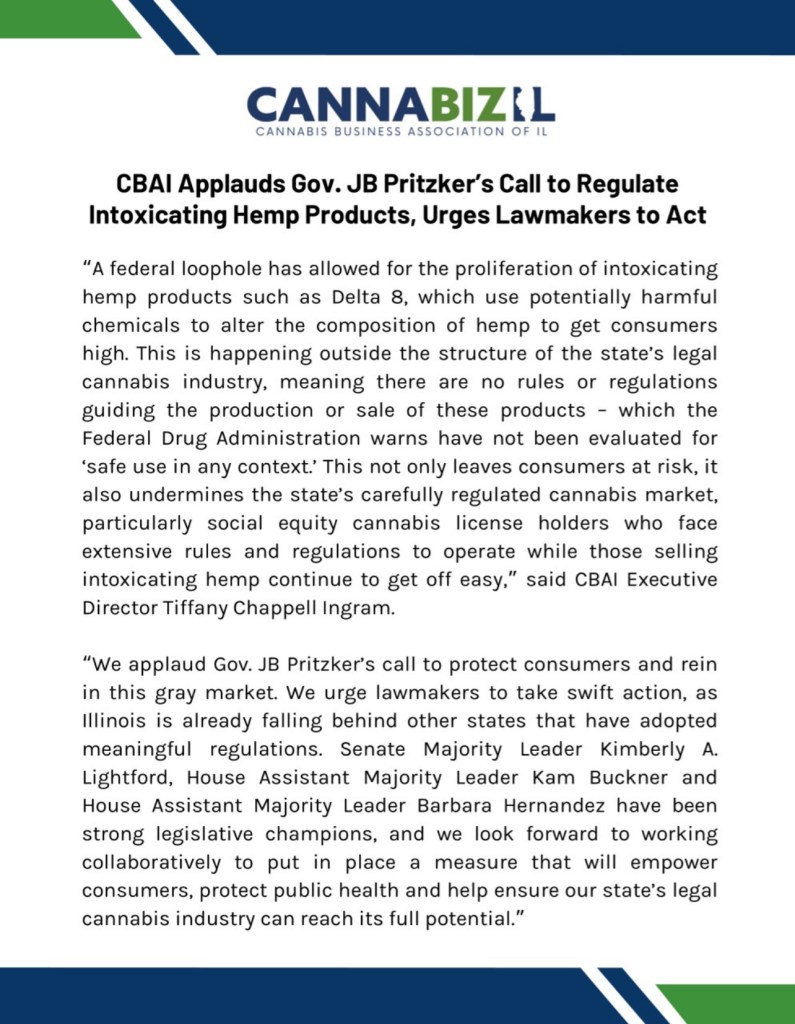
Response from Cannabis Business Association of Illinois is displayed below.
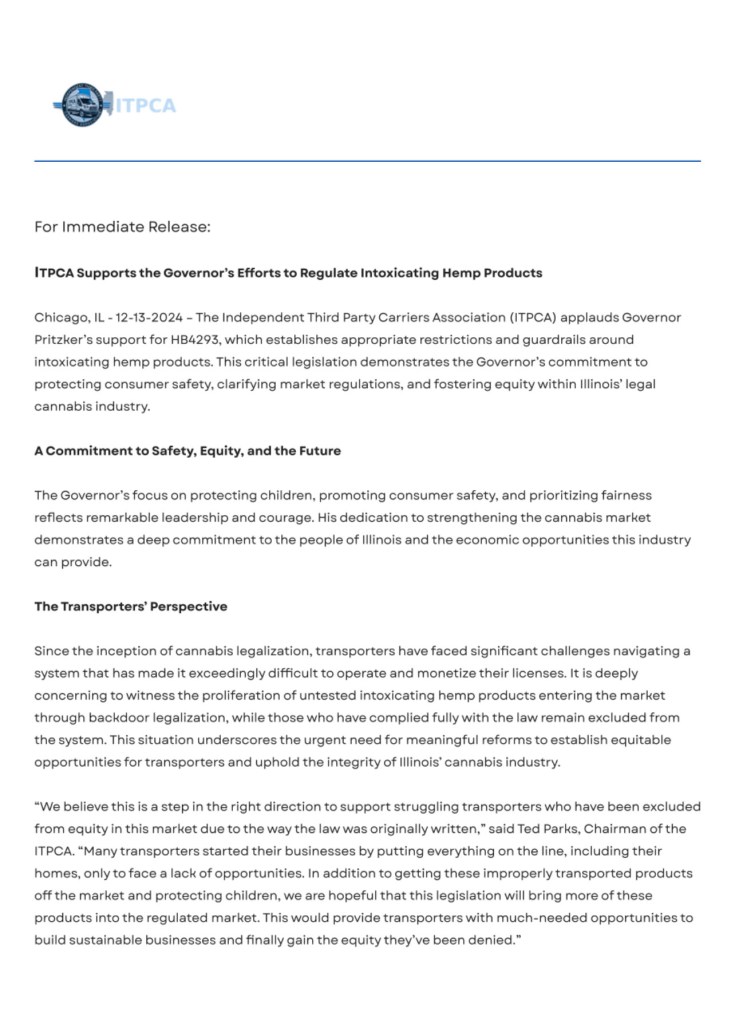
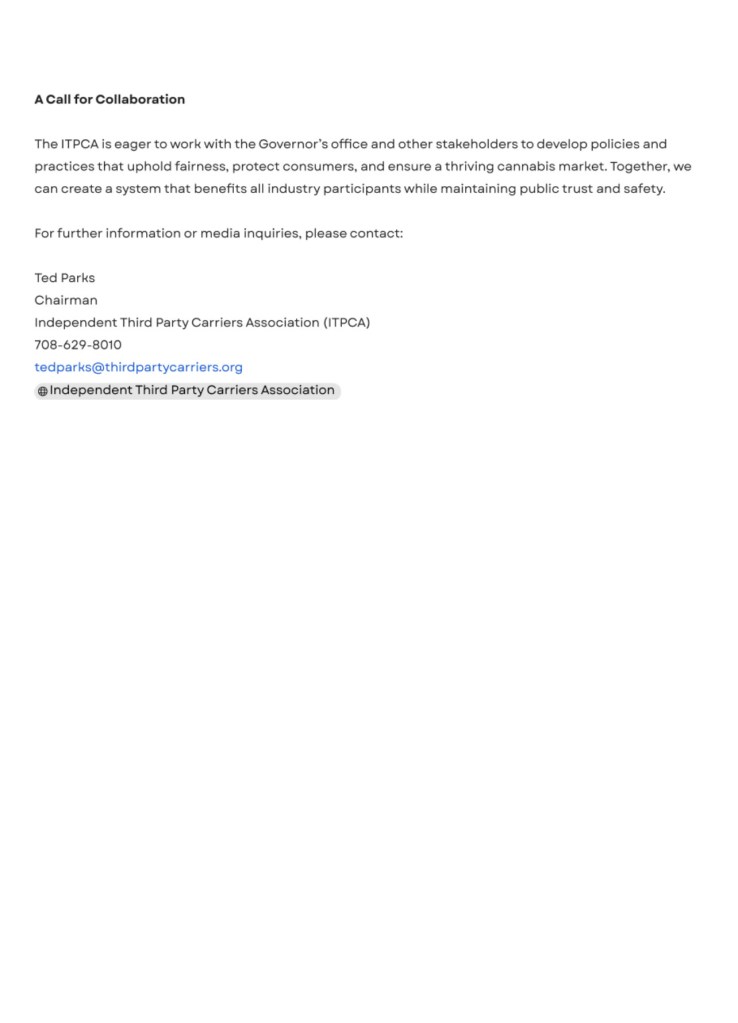
Response from Independent Third Party Carriers Association is displayed below.
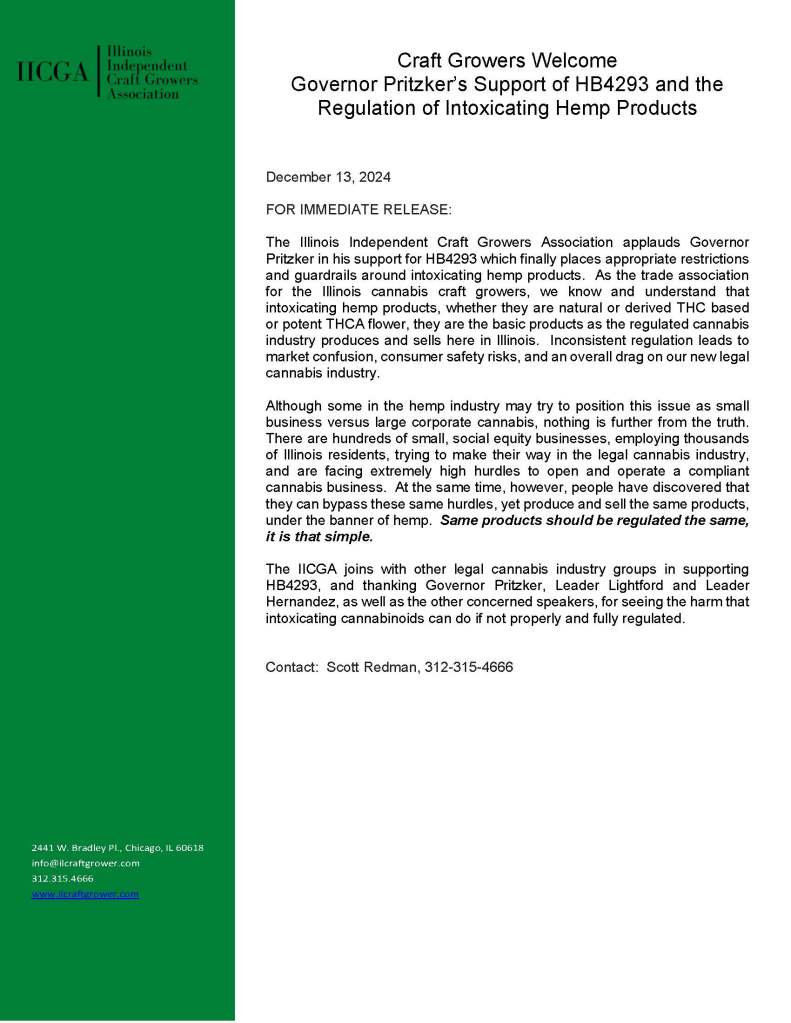
Response from Illinois Independent Craft Growers Association is displayed below.
Response from Illinois Hemp Business Association is displayed below.
 The Cole Memo
Leave a comment