
On November 12th, during a scheduled second reading of Illinois’ new hemp regulatory rules, state officials addressed mounting confusion and panic within the Illinois hemp industry. In the lead-up to the hearing, many people became increasingly concerned that these changes would drastically impact the market.
In this article, I share perspectives from both the industry and state officials, who ultimately indicated that the rule’s impact was not as severe as some may have feared.

- Background
- Inspiration for Article
- Alternative Perspectives
- Illinois Department of Agriculture Responds to Hemp Hysteria
- So, what does this mean?
- Media Coverage
- Documents
Background
In October, IllinoisNewsJoint reported that the Illinois Department of Agriculture’s proposed amendments to the Illinois Industrial Hemp Act had progressed to the Second Notice stage. This advancement is part of the standard rulemaking process overseen by the Illinois Joint Committee on Administrative Rules (JCAR).
Earlier this month, IllinoisNewsJoint reported that these proposed amendments to the Illinois Industrial Hemp Act would “regulate and redefine how THC and THCa levels are measured (essentially banning hemp and hemp products in Illinois)”.
On November 7th, 2024 PRNewsWire shared similar information which indicated that the new rules would “criminalize the sale and transport of hemp products”. Most recently, Rod Kight wrote about the impending death of the Illinois hemp industry.
The common thread between all four of these articles appear to be comments from the Illinois Hemp Business Association (IHBA). IHBA claimed that they had concerns that Illinois regulators are overstepping statutory authority by redefining “cannabis” and “THC” in ways that criminalize existing hemp businesses and their consumers.
Ahead of the November 12 JCAR hearing, the IHBA argued that new definitions, along with restrictive changes to THC calculation methods and business-to-business transportation rules, conflict with the 2018 Farm Bill and would effectively render a substantial portion of Illinois’ consumer hemp market illegal outside of licensed dispensaries.
Inspiration for Article
In recent weeks, this panic has led me to receive several calls and messages from people that I know (and complete strangers), all of which indicated to me that they’ve become increasingly worried about the proposed rules in JCAR. Most callers mentioned that their fears had been amplified after reading online claims suggesting that these rules would mark the end of Illinois’ retail hemp industry.
Below is an example of a message I received.
I’ve been reading and hearing that JCAR might take action next week that could seriously impact our hemp business. We’re feeling panicked because we were ready to address this legislatively but thought the Department of Agriculture didn’t have the authority to implement the changes we’re reading about online. Do you know anything about this? Is this the end of hemp?
Anonymous
Recently, there has been a strong push in Springfield to limit the open access that Illinois consumers currently have to hemp-derived legal-THC products (HDLTs) as a result of the 2018 Farm Bill. Regulators and industry representatives argue that this access undermines licensed participants under the highly regulated Cannabis Regulation and Tax Act (CRTA).
HDLTs are readily available in liquor stores (like Binny’s), online retailers, and other traditional retail channels, much like any other (legal) common consumer packaged good. As a primary beneficiary of this newfound access, I became extremely concerned when I read the IllinoisNewsJoint article which suggested that these rules would “essentially” ban “hemp and hemp products in Illinois.”
Rather than entering the HDLT market, CRTA licensees have lobbied to keep cannabis treated as a Schedule 1 substance rather than as a descheduled product, like HDLTs. The foundation of their claim is that HDLTs threaten the limited brick-and-mortar model that the cannabis industry is built on. Instead of adopting the positive aspects from federal hemp progress, industry participants seem focused on dismantling it entirely.
With all of this in mind, I decided to reach out to my some of my trusted sources and tune in to the JCAR hearing to learn more.
Alternative Perspectives
Multiple sources were quickly able to reassure me that there is nothing to worry about and that IDOA has no authority to ban hemp, nor have they ever claimed to.
These amendments adjust the rules, not the statute itself, so there hasn’t been a major change to the law. What we’re seeing is the Department of Agriculture reorganizing and clarifying the language they use to maintain primary regulatory authority over hemp production in Illinois. This plan, which they submit to the USDA, essentially demonstrates the state’s compliance framework, ensuring that hemp produced here stays below the 0.3% THCA limit—a primary USDA requirement.
Most of the language in these rules is directly adapted from USDA guidelines. The changes you’re seeing in this second notice aren’t significantly different from the USDA-approved hemp production plan established in 2020. While there are updates, they’re focused on production rules, not retail products or unlicensed entities. If you’re a licensed cultivator or processor, these rules apply to you primarily on the production side, particularly for pre-harvest testing. Once you have a compliant pre-harvest test, you can move forward as you always have since 2020.
To clarify, there’s no change impacting the retail market—these updates are part of the Department’s ongoing process to keep production rules current and aligned with state law and USDA requirements.
Chris Berry, Illinois Hemp Growers Association
Chris’s perspective, above, was captured in an episode of the Cole Memo that was recorded on November 11th. You can view the episode which features discussion on these rules and new hemp legislation here.
Chris also made it very clear that IDOA had no authority to ban hemp at the November 8th, 2024 Town Hall that IHGA hosted, clip below.
Illinois Department of Agriculture Responds to Hemp Hysteria
On November 12, 2024, David Lakeman, Division Manager for Cannabis and Hemp at the Illinois Department of Agriculture (IDOA), and Sam McGee, Counsel for the Division of Cannabis and Hemp at IDOA, appeared at the JCAR hearing regarding the proposed hemp rules. They confirmed that IDOA has no authority or intent to ban hemp products via the rulemaking process.
Transcript
Senator Christina Castro posed a series of questions to David and Sam, which are detailed in below transcript.
Click here to see full transcript.
If you’d prefer a quick overview instead of reading the full transcript (below), click here for a summary of key points and next steps
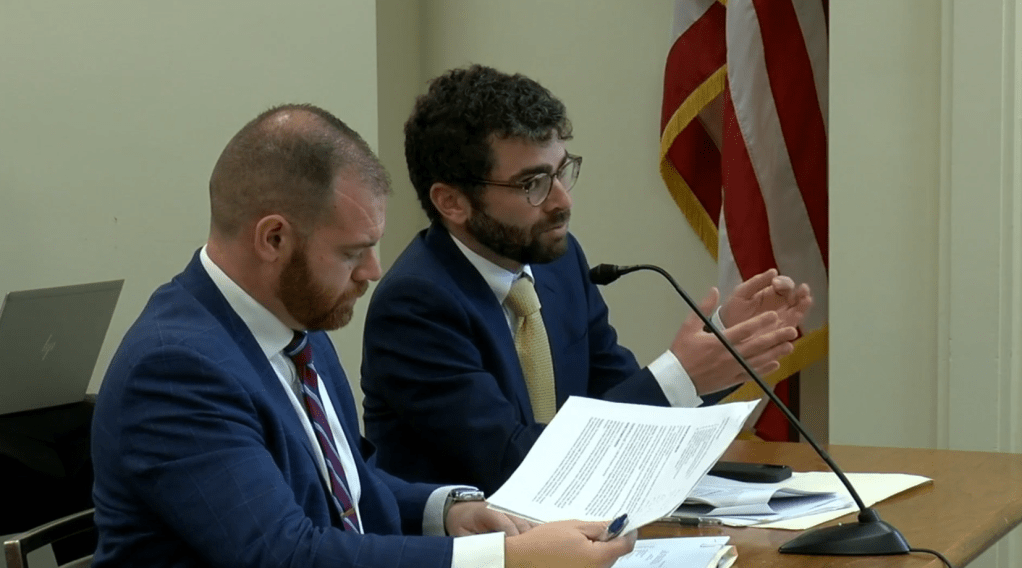
Senator Christina Castro: I have a lot of questions, and I’m just going to go through them because I think some folks have concerns about the rules. I also believe some JCAR members wanted clarification on the intent of the rule. So, let me start by asking: what is the Department’s intent to accomplish with this rulemaking?
David Lakeman: Thank you, Senator. I think that question is key to many of the questions that have come into the committee over the past several weeks. To be clear, the Department’s intent here is solely to align with and implement the United States Department of Agriculture’s rules on hemp, as outlined in the 2018 Farm Bill. It is unequivocally not the Department’s intent to take any action toward regulating products or moving toward an outcome similar to the bill, which this department—and I—supported last May that will handle some of those issues. That is not our intent here.
To be abundantly clear, if the Department intended to pursue that, we would have been open about it. We would have worked with committee members, trade groups, and other interested parties. Our sole intent is to implement the 2018 Farm Bill. We’ve made an effort to incorporate stakeholder comments to ensure Illinois fosters a successful hemp industry. We responded to numerous comments through first and second notices to achieve that.
At its core, the Department was bound by USDA limits. For additional clarity, this is an unusual situation where the USDA must also approve these rules concurrently with this committee. They review our revisions, consider stakeholder comments, and determine what we may or may not pursue. We’ve done our best to make Illinois as successful as possible and to be as responsive as we can, though I acknowledge I could have done better.
But our intent here is solely to implement the Farm Bill—not to branch into any of the areas that House Bill 4293 delved into last spring.
Senator Christina Castro: So just to clarify, this rulemaking process that you’re doing is to comply with the USDA hemp rules; it is not to regulate hemp products or the hemp intermediate?
David Lakeman: That’s correct.
Senator Christina Castro: What is the Department’s source for the defined terms? Why are these definitions different from those found in state law?
Sam McGee: So that’s kind of been a struggle that we’ve had because the state law definition is different than the federal definition and we’re implementing a federal program we need to comply with their definition so in the initial proposed rule we kind of attempted to work on a hybrid of the state definition using incorporating the aspects of the federal definition that we needed to have um in the rule which is namely the total THC standard of 0.3% which would include Delta 9 THC as well as THCa as well as like a reference like the seeds and…but I think that created a higher level of confusion and concern and USDA was okay with that hybrid definition however I think as we’ve received comments I think it would just be clearer to use the exact Federal definition and our Authority for that comes from a provision within the industrial hemp act that states that if there’s a conflict between federal and state law the federal law should apply so arguably it should already apply today this would just merely clearly codify that so for purposes of our licensed growth program.
If you’d prefer a quick overview instead of reading this entire transcript, click here for a summary of key points and next steps
Senator Christina Castro: Can you explain why the department is expanding the prohibition on licenses and registrations for persons with controlled substances related felonies to any person associated with the applicant who has executive managerial control of the licensed entity?
Sam McGee: So that one is a straight federal requirement; it was required under the federal rules. We attempted to put in language so that if the federal prohibition on that were to change, we could immediately come in and remove that requirement. We don’t really find it an important requirement, but it is something that the federal government has required, and as soon as that is no longer required at the federal level, we’ll adapt accordingly.
David Lakeman: And again to that point, the federal government and USDA have been extremely rigid on that section for us and for every other state that is running its own hemp program.
Senator Christina Castro: How did the Department complete its regulatory flexibility analysis for this rulemaking?
Sam McGee: A lot of the current hemp growers are operating under the federal hemp plan, so there isn’t a huge amount of change for the licensed growers based on how they’ve been operating. So, um, when we conducted that, we didn’t conduct it on, I think, where a lot of the concerns are—which is on the retail sales—because our intention is not to regulate the retail sales. So the impact should be, uh, is intended to not impact retail sales. That was our analysis on that.
Senator Christina Castro: What concerns did small businesses raise during the public comment period? Were alternatives suggested? And how is the Department addressing those concerns and alternatives?
And we say that because we’ve been hearing—granted, mixed messaging—that the Department has not been open to having conversations as they’ve provided comments. It just seems like, and this committee has an opinion about ex parte communication, right? And we always say, do not use ex parte communication as a reason not to engage in conversation, but just make it transparent that you’re having these conversations. It is frowned upon to use that as a shield to hide behind engaging in conversation, especially with people who are opposed to the rule.
David Lakeman: Absolutely. So, the department did make a number of changes on the basis of comments we received—written comments both directly to the department as well as comments that came to JCAR staff and therefore to the department.
It is the philosophy of the department that we be open and transparent with our rule processes. It is equally clear, that we did not meet that standard in every case here, and I take responsibility for that. You know, in our engagement with JCAR staff, we have agreed both to a 45-day extension and to an extensive stakeholder meeting in an attempt to make sure that we are meeting that standard of communication, transparency, and openness to the input from, from the industry and from those impacted by the rule to make sure that, that they are being heard, that those changes are able to be implemented as best we can and that we are meeting this committee’s standard for responsiveness and openness as we go through that process.
And I do think that one of the places we got into is that, you know, as we were making comments, especially at the tail end of the first notice section as well as into the second notice, we did our best to be responsive to some of those questions and make some of those changes. I do think that through that process then, that led to more questions which I think is, is why we really appreciate the proposal from the committee to have a full stakeholder meeting in which we can discuss what the department’s intent was, and also how we can implement that more clearly and better to provide that clarity and structure for them.
Senator Christina Castro: I appreciate that, David, because a lot of folks are not familiar with the JCAR process, and it’s very different from the legislative process, which can be confusing and frustrating, yes. So, making sure communication is happening both ways and walking them through the process—how this is different, and how this is not legislation—that will, I think, ease concerns and fears you’re hearing from a lot of the opposition, right?
And I appreciate the fact that you are having that conversation and are willing to continue it, so that all stakeholders can feel heard, can give their comments, and understand that while you will take comments, not everything will be incorporated, but at least they were heard.
David Lakeman: That is extremely important to me. The success of this program is extremely important to me and the department, and we want to make sure that in any case where we’re providing impediments rather than tools for success, we’ve done our best to address that. You absolutely have my commitment that we will hear them out, we will have that meeting, and we will have those conversations.
You know, and again, it is clear that I personally could have done better on that, and I want to make sure that we are doing that moving forward so that everyone feels satisfied with the place we end up
Senator Christina Castro: Did the Department consider any less stringent compliance or reporting requirements in response to public comment? If so, what were they?
Sam McGee: Yeah, there was one major…main one that we had. there was a—in our initial proposed rule, we had a requirement that any transport of hemp would have required a detailed manifest. And the intention behind that was so that the licensed growers would have some form of documentation if they were pulled over by law enforcement. It’s similar to what we do in the cannabis industry; however, that is verified by the state’s seed-to-sale tracking system.
So the requirement was there to, like, provide some sort of documentation to the licensees; however, we received a lot of concern and pushback from that and removed that requirement. So that would be the main one.
Senator Christina Castro: Okay, that’s good to know. Did the Department state its reason for rejecting any regulatory alternatives suggested by small businesses?
Sam McGee: There, I would say, some of the—maybe some of their concerns were with some of the testing requirements, and those are mostly governed by federal law. So, where we were able to make changes to them, we tried, um, but in some regards, we just adopted more clearly the federal standard, held to that, and that’s as far as we can go. But that would be the reason why some of them weren’t fully addressed.
Senator Christina Castro: I think there’s a bit of confusion because, like in the CRTA, you know, people who can test are hard and few between. And I think there are some concerns about, you know, how does this look, is there capacity, um, and there are legitimate concerns as we’ve talked through that when you’re looking at testing a product, right? So I think that that is a bona fide concern, and while I recognize you’re following the federal guideline, I think addressing that and being a little bit more explicit about why and how—and also explaining to them where their options are, who they can use, where they can find that list—again, this is part of the JCAR process. People are not familiar with what this is, and I think taking the time and care to walk them through that would be helpful.
Sam McGee: The Department has just about finished construction on a state reference lab for cannabis testing. We don’t have initial plans to do this, but the rule would allow us to conduct some of the compliance testing should private operators not be able to. It just gives us that authority to do it and charge a fee to recoup costs. But that isn’t something we have immediate plans to do. Should that need arise, that would—
David Lakeman: Yeah, and again, that is an intended backstop that we’re going to explore as the build-out of the lab is completed, as we explore kind of how we’re going to approach that. There was a coordinated pushback from most states, irrespective of partisan lean, on the requirement to use only a DEA lab. Right now, for instance, I believe there’s only one in Illinois that would have been able to do that. I do expect that there will be some changes to those requirements in the federal rule in the next Farm Bill, whenever that may be.
But the Department’s intent, again, is to provide resources toward that end, and I really appreciate that flag for us. And again, also in the build-out of a lab at the Department that will allow us to provide additional resources there.
Senator Christina Castro: And how long do you think it would take to do the buildout of the lab?
David Lakeman: It is almost complete.
If you’d prefer a quick overview instead of reading this entire transcript, click here for a summary of key points and next steps
Senator Castro: And will you be at capacity… if you add this new provision will you be able to meet the demand?
David Lakeman: We’re in the path-blazing section of this—there are no state-run cannabis reference labs in the nation that I’m aware of that’s ahead of us. So, we’re going to be writing the book on how this looks. For some of the pieces, we’ll be able to scale up very quickly to be a resource for others. It’s going to take some back and forth with what stakeholders need; it’s going to take development of policies and procedures. We have to make sure that the instrumentation we have is correct.
You know, again, this has been a multi-year project in coordination with the legislature, and I have to reiterate again that we really appreciate the support in getting this done. We think this is going to be a key tool in providing that support not only for our cannabis licenses but also for our hemp licenses.
Senator Christina Castro: I think it’s great that we’re doing that. I think it’s great that we’re doing that, but I also think, you know, as you’re ramping this up, there needs to be options that are very clear and concise so folks know where to go, right?
David Lakeman: Yes.
Senator Christina Castro: The last thing they need is a delay in being reviewed, especially if they’re following all the rules.
David Lakeman: Yes.
Senator Christina Castro: And guess what? That’s time, and that’s money, right? So, I think we have to be cognizant of that and make sure that everything is nice and clear—like, if they can’t use the state lab, who can they go to. And if not, can they go search their own third party. What are the requirements of that third party to meet the state rule on fees. Can the department explain why it is establishing testing and sampling fees?
Sam McGee: That exact situation: so that we we’re not undercutting the private labs. We could still recoup our costs, so just giving us some flexibility since we don’t know exactly. I think we clarified some of the pricing on it to try to make it more clear that this is an optional fee—like, if they choose to test with us, you will have to pay a fee, but it’ll be within a reasonable realm of what it would cost for us to conduct that.
Senator Christina Castro: And when would hemp grower, hemp processor, hemp transporter or retailer be required to pay these fees?
Sam McGee: So they have to pay a license, an annual license fee; that would be the only fee that they’re required to pay to us. The sampling fees would only be if they decide to use [us]—we offer that testing and [if] they decide to use that testing. I think we would always still allow for the option of the private labs as long as they’re willing to do it.
Senator Christina Castro: Will the Department assess these fees during announced or unannounced inspections or audits?
David Lakeman: For the testing section?
Senator Christina Castro: Anything. Any of the fees.
David Lakeman: Any fees established are going to be abundantly clear to our licensees. There won’t be any surprise or hidden fees to any licensee.
Sam McGee: All of the annual fees are in the rule; we can’t change them without coming back here. The only fee that’s staggered is the testing fee.
Representative Ryan Spain: Thank you both for your presentation and testimony today. I just want to go back to, uh, one item that you mentioned, and it’s been the subject of a lot of conversation that has made its way to members of JCAR, certainly. Uh, but you stated that it certainly is not your intention to regulate, uh, the retail sales of hemp products through this rulemaking. Can you talk about, though, the transportation at a consumer level from a retailer—a point of sale scenario—and what discussion you’ve heard about, uh, transportation for customers and what changes, uh, you have been willing to consider on that topic?
Sam McGee: A lot of the, I think, concerns have come from the initial—the current rule written a number of years ago addresses some of these— states that some of these things: that the Department shall not prohibit the retail sale. The Department does not restrict the transportation. Um, you know, at this point we’ve returned all the language that was in the current rule because I guess there’s a lot of—some of the retail industry is using that as a form of validation that it is allowed.
I think from our perspective that is outside of our regulatory authority because we regulate the licensed growers, the licensed processors, but don’t have authority over the transport, the retail sale. That would be more appropriate for local government, law enforcement, that kind of thing. Until there is a statutory change that would give the Department authority to regulate that part of the industry. Unlike in cannabis where, you know, the Department has the full authority to regulate up and down from retail sale up to the cultivation
David Lakeman: And again, just to build off of that, the technical piece of it—just simply to reiterate—it is not our intent whatsoever with these rules to venture into the hemp-derived product space. Even the piece of this that accounts for processors is not necessarily under the full aegis of the USDA rules; it’s just a part that they’ve allowed us to do so that we have some means of turning industrial hemp into product.
So there’s no intent here to venture into that space. We’re well aware of the limits of our authority, and we’ll be happy—and have been happy—to engage at the legislature on determining what that looks like. But that’s not what we’re doing here, certainly not our intent in any of these rules. Again, we would have been very, very upfront and clear if that were the case.
Representative Ryan Spain: Sure, now, is there language in the 2018 Farm Bill that speaks to the protections of transport from a retail point of sale for hemp products?
Sam McGee: I don’t…there may be a provision in… in the rule…I think where the concern for our rule making was there was Provisions within the rules that were adopted prior to the 2018 farm bill um and so there there was a deletion of what provision in that that has since been returned…
Representative Ryan Spain: Sam, that’s what I’m trying to get to because that’s, I think, the key concern there. Uh, there was some language, uh, and it was deleted—maybe you believed it was duplicative or unnecessary—but it is your intention now to return that language back to these proposed rules?
David Lakeman: It is. And especially, I think the two main provisions you’re talking about are 1200.1110 and 1200.90, and those were both put back in. Um, the .90 was entirely—and again, accepting full responsibility here—that was a track change error in the back and forth on some of the drafts. And .1110, there was an original belief from us that that was covered in a different section, but given those concerns, we reinserted that section. Both of those are in the current rules that are before you to address those concerns that may have had a negative impact.
Representative Ryan Spain: Okay, and just for those that may be here in the room in Springfield or watching online, you may not see that language yet, but we have accepted an extension of this rulemaking until our December meeting. So there will be a revised filing in language that will be up-to-date with those changes reinserted?
David Lakeman: Yes.
So, what does this mean?
In the exchange detailed in above transcript, Senator Christina Castro questioned Illinois officials about their intent and adherence to federal guidelines in new hemp regulations. David Lakeman clarified that the Department’s sole aim is to align Illinois’ hemp industry with the USDA’s 2018 Farm Bill, not to impose new product regulations or extend authority over retail sales.
Sam McGee noted definition differences between state and federal law, stating the Department would now strictly follow federal definitions. McGee also explained that certain licensing restrictions are federally mandated, and some proposed requirements, like transport manifests, were removed after public feedback.
Previously removed language regarding the legal transportation of retail hemp products by consumers and retailers will be reinstated following concerns from stakeholders and legislators. Representative Ryan Spain emphasized the importance of including these provisions to prevent regulatory gaps affecting retailers and consumers. David Lakeman confirmed this consumer transport language will appear in the revised rules, specifically under sections 1200.1110 and 1200.90, noting that prior deletions were unintentional.
Officials also discussed Illinois’ new state cannabis testing lab, set to help ensure compliance but not necessarily to serve as a main testing facility
In short:
- Adherence to Federal Guidelines: Illinois aims to align its hemp regulations with USDA standards from the 2018 Farm Bill, not expand into product or retail regulation.
- Clear Definitions: The Department will adopt federal definitions to resolve discrepancies with state law.
- Licensing Restrictions: Federally mandated restrictions apply, though transport manifest requirements for growers were removed after feedback.
- Consumer Transport Protections: Language ensuring legal transport of retail hemp products will be reinstated in response to stakeholder concerns.
- State Testing Lab: A new lab will support compliance efforts but isn’t intended as the primary testing provider.
Next steps
Acknowledging communication gaps, the Department agreed to extend the rulemaking timeline by 45 days and hold a stakeholder meeting to improve transparency. JCAR will review the updated rules in an upcoming session.
Recently, Rep. Sonya M. Harper introduced an alternative hemp regulation reform bill, House Bill 5903, which proposes regulating hemp without altering the legal definition established by the 2018 Farm Bill.
Veto Session
Whether any hemp or cannabis legislation will see action during the veto session remains uncertain.
According to IllinoisTimes, when asked about any pressing agenda items to push through during the veto session or January’s lame duck session, Governor Pritzker responded, “Nothing that comes off the top of my head” and noted that he doesn’t believe the legislature has an agenda for the veto session. Similarly, House Speaker Chris Welch stated, “I think it’s too early to know what we’re going to do in veto session, if anything.”
Earlier this year, the Alliance for Cannabis Equity (ACE) expressed frustration over the lack of progress on cannabis legislation. Most recently, media reports have surfaced alleging that corporate cannabis operators had stifled legislative progress. This isn’t the first time that corporate cannabis operators, specifically GTI, have been accused of opposing proposals that were supported by social equity licensees.
A parting observation: The corporate cannabis operators seems content with the status quo. Meanwhile, the hemp industry has embraced reform (and the concept of open-competition).
You can support my work by sharing this article, by clicking here, or by visiting ColeMemo.com/Support
Media Coverage
WCIA3 wrote about this issue here.
Documents
I wanted to share some of the information that was shared with the media in the leadup to the November 12th JCAR hearing. The below document by IHBA was included in the coverage by Illinois News Joint and Rod Kight.
IHBA provided the following document to me on October 31, 2024.
Support The Cole Memo by making a one-time contribution
Support The Cole Memo with monthly contributions
Support The Cole Memo with yearly contributions
Choose an amount
Or enter a custom amount
Your contribution is appreciated. Your contribution helps us afford equipment to capture our content and hosting fees to distribute our content.
Your contribution is appreciated. Your contribution helps us afford equipment to capture our content and hosting fees to distribute our content.
Your contribution is appreciated. Your contribution helps us afford equipment to capture our content and hosting fees to distribute our content.
DonateDonateDonate
#262 – Odor-Proof Packaging, Witness Slips, and Illinois Cannabis Regulator Vaughn Bentley’s Take – The Cole Memo
- #262 – Odor-Proof Packaging, Witness Slips, and Illinois Cannabis Regulator Vaughn Bentley’s Take
- #261 – Recapping Governor Pritzker’s Address with Jeremy Gorner
- #260 – Chicago Vetoes Hemp Ban, Illinois marijuana news, featuring Jeremy Gorner!
- #259 – MSOs Get Sued, Outdoor Grow Quietly Allowed in Illinois, What Illinois Got Wrong With “Legalization”, + More
- #258 – The Reality of Being a Craft Grower in Illinois
 The Cole Memo
Leave a comment