
On May 23, 2024, the Senate Executive Committee held a hearing on HB4293. Recently, Senate Amendment 002 was added to HB4293, which is a piece of legislation known as known as the Massage Licensing Act and the Sex Offender Registration Act. Notably, this legislation was entirely unrelated to the subject of hemp.
At the time of this writing, the witness slip count shows 32 proponents, 773 opponents, and 34 votes with no position. You can view the list of proponents and opponents at the bottom of this post.
Recently, there was a press conference for the language that was added to HB4293. You can view the transcript of the event here. You can listen to hemp growers respond to the press conference here.
Below is a transcript of the hearing. This transcript is a representation of spoken words.
- Transcript
- Proponents of HB4293
- Opponents of HB4293
- Media Coverage
- Satirical Coverage
- Delta-8 inside of dispensaries
- Undermining Social Equity?
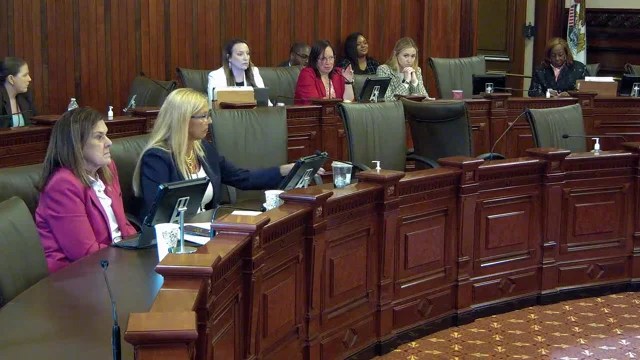
Transcript
Senator Christina Castro: The next bill, House Bill 4293, Amendment Two. As I understand, again, a lot of discussion on this bill. But I’m going to limit it to three proponents and three opponents. Senator Lightford, right now you have 27 proponents, 682 opponents, and 11 no position. Leader Lightford, on your bill.
Senator Kimberly Lightford: *laughs* I didn’t know that I had any opponents. *laughter audible in room*.
Well, let me share with you, ladies and gentlemen of the committee, there’s a recent study by the Journal of the American Medical Association found that more than 11% of high school seniors report using Delta 8. Parents across the state continue to receive the call no one wants to receive — the call that their child has consumed Delta 8 THC and is being transported to the hospital. Our effort here today is to take this current unregulated market that undermines social equity license holders who have long worked to establish a legal, well-regulated business and move towards regulation of hemp and Delta-8 products so that we can ensure that we do it in a way that is equitable and provides opportunities within the evolving industry.
Note from Cole: Senator Lightford referenced this study. In that same study, they found that 29% of 12th graders reported cannabis use in the last year. Notably, this number is higher than the number of 12th graders that reported use of Delta 8 THC.
So, what this bill does: it protects consumers of all ages, it helps our cannabis industry flourish, it keeps the promise to our social equity communities, and it does not stifle reputable hemp business establishments. So, in a nutshell, we are regulating hemp-derived THC, commonly referred to as Delta 8. The hemp plant is prohibited from having more than 0.3% of Delta 9, which is the psychoactive chemical in cannabis. Hemp also contains trace amounts of Delta 8.
House Bill 4293 bans all hemp processors, craft growers, infusers, and cultivators from synthesizing CBD molecules, which do not cause a psychoactive effect, into Delta 8 and Delta 9, which do cause a psychoactive effect. The bill allows hemp processors, craft growers, infusers, and cultivators to extract the 0.3% of Delta 9 that is naturally occurring in a hemp plant and infuse it into products.
Note from Cole: According to an extended Illinois Department of Agriculture policy effective as of March 29, 2023, cannabis business establishments licensed in Illinois may use industrial hemp as an ingredient in cannabis-infused products offered for sale at licensed dispensaries.
MariMed admits to using hemp in their infused products in above video.
In short, this means that cannabis operators have been allowed to use hemp in their infused products. Below are two examples of operators admitting to using hemp in their cannabis products. It would seem that this proposal permanently codifies the variance which had been issued previously. The most recent variance can be found below. It appears to have expired on 12/31/2023. It is unclear whether or not the variance has been extended.
Edit on 11/12/2024: This policy was extended in August of 2024.
Senator Kimberly Lightford: In this bill, we would also ban the sale of any hemp-derived THC products from being sold in the state except at licensed dispensaries. The bill allows for unrestricted sales of CBD products, which are required to have less than 0.5 milligrams per serving and 2 milligrams per package of THC. Lastly, hemp THC products are required to have potency limits of 5 milligrams per serving and 10 milligrams per packaging. The possession limits of hemp THC products are the same as cannabis products and are not cumulative. The taxes levied on hemp THC products are the same as comparable cannabis products. So, we do have a timeline that we created to identify how this would take place. July 1 of 2024, selling of hemp-derived THC products outside of a dispensary is illegal. Those that are registered with the Department of Agriculture as a hemp processor can continue to process hemp and non-intoxicating and intoxicating substances as long as they update their registration with the Department’s new requirements. The Department of Agriculture will now have increased authority over hemp processors. Social equity craft growers, social equity infusers, and cultivation centers may process hemp by extracting the naturally occurring chemicals into concentrates. All processing and diffusing of synthesized THC from hemp is banned in Illinois, and hemp processors can continue to make CBD products for sale in the state and can make any product for sale out of state.
The next step is on January 1 of 2025, the Department of Agriculture will make two license types: one for hemp processors making products not intended for human consumption and another for hemp processors making products for human consumption. All products made by a hemp processor must be sold to either a social equity craft grower or infuser in order for the craft grower and infuser to sell the product to a dispensary. That’s January 1 of 2025. Then, by March 1 of 2025, the Department of Agriculture will distinguish between non-intoxicating hemp processors making a product for human consumption and intoxicating hemp processors making a product for human consumption. The intoxicating hemp processor shall meet the license requirements set forth by the department. Then, two months after that, on July 1 of 2025, all CBD products must be registered with the Department.
Senator Kimberly Lightford: So, how do we get from a plant that’s hemp to having so much THC that it crosses the line of being a cannabis product? There’s a process for creating hemp-derived products that causes a psychoactive effect. In step one, a hemp processor creates a hemp extract. The processor prises the plants and creates a liquid or oil. I’m not going to do all the steps, but I want to make a point here: step two is the hemp process is distilled. When he distills the extract into molecules like CBD, Delta 9, THCA, etc., at this point, the distillate becomes known as hemp THC concentrate, which is what we’re talking about here in House Bill 4293.
Now, nothing’s wrong yet until we get to step three. Here is where you cross the line: when you take the distilled CBD molecules and put them in a machine, you spin them around and you heat them up and add an acidic solution to cause the isomers and covalent bonds to move around and create either Delta 8 or Delta 9 depending on the conditions the CBD molecule is put under. *pounds fist* That’s it right there, ladies and gentlemen, step three. Here is why we need to regulate because we just crossed the line from hemp un-intoxicating to intoxicating cannabis above 0.005 that alters what you deem it to alter depending on you and your impact.
So, with that in mind, I’m hoping that you all would know that a lot of work went into creating this hemp piece. It’s important that Delta 8 and Delta 9 be regulated, but it’s also important that we do what we can to support this business industry at the same time. Madam Chairman, I’d be happy to answer questions.
Senator Castro: Thank you. I understand the Department of Ag would like to give testimony as well. David Lakeman, Sam McGee.
Note from Cole: You can view my interview and visit with David Lakeman at the Cannabis Division at the Illinois Department of Agriculture here.
David Lakeman: Pleasant to see you all again. Again, David Lakeman with the Department of Agriculture. Since 2019, the department, when the first year after Congress descheduled hemp in the 2018 Farm Bill, uh, the department has been engaged in conversations, uh, considering this issue of what to do with these products that are hemp-derived but fall into a gray zone between federally scheduled cannabis, which is now state legal in the Cannabis Regulation and Tax Act, and those products which are legal through the Industrial Hemp Act and through the Farm Bill. This bill represents sort of an endpoint to those years of conversations.
Uh, believe that it reflects a great deal of input from industry, from the administration, from the General Assembly, as well as those Advocates who have engaged with all of those parties through this. The Department’s goals and the administration’s goals in the administration of this program are to emulate our mission on the Cannabis side, which is to ensure an equitable, well-regulated, and safe market for these hemp by-products, to ensure that we are offering a pathway and support to our hemp farmers and processors who are doing all that they should and also protecting the health and safety of consumers here in the state of Illinois.
What we’ve attempted to do here is to navigate each of those needs to provide for a pathway that allows these hemp businesses to be able to sell and have a market for their products but also to ensure that the programs that are dependent on the CRTA so the R3 program, uh, and others are still a part of how this industry will operate. So the hemp industry will still have a market and a pathway to operating.
Uh, it will not undermine the existing social Equity businesses under the CRTA that the department takes great pride in supporting, uh, but will ensure that consumers can have the faith that those products that they see from Bed Bath and Beyond to corner stores to vape shops are tested and that they are what they say they are. So if a consumer is looking to purchase a product that says that it is below .3% THC, they have a reasonable likelihood of actually getting a product that is below that threshold, and this is important because for so many, uh, so many consumers, so if you are a member of the military or law enforcement or if you have a CDL, a commercial driver’s license, right, test product that tests above that could have a potentially detrimental impact on your ability to work your job, and so ensuring that the labeling is correct is vital in this case.
It is also vital to ensure that the testing is done commensurate with the requirements for all other intoxicating cannabinoid products here in the state so that those consumers can be sure that not only the product is as intoxicating as it says it is but also that it is safe. So as with any bill, of course, there is always work to be done, and the department is an… a willing partner to the General Assembly and all those here, uh, to ensure that this is as, as best a bill as we can get through, um, that also protects that health and safety. Thank you.
Senator Castro: Thank you. Sam?
Sam McGee: I don’t have much further to add but just kind of here for tech support questions.
Senator Castro: So, alright. I believe, uh, Kareem would like to speak from the Majority, uh, Minority Group.
Kareem Kenyatta: Members of the committee, thank you for having me. Um, I just want to commend, you know, Leader Lightford on the work she’s done on this. You know, with the majority-minority group years ago, we helped social equity applicants actually apply and get into, uh, the Cannabis industry. And you know, the Cannabis Regulation and Tax Act is one of the few statutes that were actually designed to protect the interests of black and brown folks that wanted to get into the Cannabis industry and sell intoxicating products.
Um, and what we’ve seen over the years with hemp and what’s happened on the federal level is there’s been some confusion about intoxicating versus non-intoxicating products, and this bill goes a long way in capturing what we deem intoxicating products and making sure that we keep them out of the hands of children and others who some of these products have been marketed towards.
Um, you know, I think based on what we’ve seen, uh, and that’s not to say there are not good actors in this industry, but based on the behavior of the bad actors, it’s very clear, and the federal government has supported this effort to say, you know, what they did on hemp was a floor and not the ceiling, that there needs to be further regulation by states to make sure that people and communities are protected.
Um, again, I could go on a long time about this, but I’ll just end it by saying, you know, one of the main other main issues that we wanted to address with the Cannabis Regulation and Tax Act was making sure that communities were also protected from various intoxicating substances that enter in. And with CRTA, we can track from seed to sell what is going into stores and what’s being produced in communities. And not to mention, when we talk about the R3 program, a program that was specifically designed to give money that came from these intoxicating products back to the community so that programs can be created and ways that, you know, not only benefits them but, you know, folks who find themselves on the wrong side of the law as so many have over the years with the War on Drugs.
Um, so I’ll leave it there, happy to answer any questions, but again, I applaud Leader Lightford and other members who have come to the table and tried to work out what, you know, is a fair deal for everyone who wants to sell these intoxicating products. Thank you.
Note from Cole: Kareem Kenyatta appeared on episode 3 of my podcast. During that episode, I hosted a debate on the subject of hemp-derived cannabinoids.
Senator Castro: We’re going to go to the opposition, gentlemen. If I can have you step back for a minute to allow the opposition to come, uh, we’re going to start with Corryn Bradley, uh, Noble Brands Sticks, and Sustainable Innovations. If you come forward, give your testimony. All right, whoever would like to go first, please go ahead, state your name and start your testimony.
Corryn Bradley: Madame Chair Castro, Vice Chair Aquino, Minority Chair Anderson, and members of the Senate Executive Committee, thank you for allowing me to testify today. My name is Corinne Bradley, and I represent the therapeutic hemp industry. On behalf of our industry, we are fundamentally opposed to the regulatory structure that is presented in Senate Amendment 2 of HB 4293.
For the last three years, we have worked together with members of the General Assembly and the growing hemp industry pushing for regulations to protect consumers. However, this proposal would instead ban Illinois’s entire existing hemp industry. Proponents claim that this bill is intended to regulate hemp, and the reality is that it will regulate the hemp industry out of existence.
The bottom line is that this is a ban. Responsible hemp businesses support strict regulation of Delta-8 and other hemp THC products, including raising the purchasing age to 21, prohibiting lookalikes that resemble popular candy and snack products, implementing strict licensing, testing, and labeling regulations, as well as a tax that could bring in much-needed new revenue to the state. And it is agreed that if anyone is making or selling hemp THC products in Illinois and breaks these rules, their licenses should be revoked.
What could be a collaborative effort to protect consumers and support entrepreneurs has become a battle between big cannabis and their need to eliminate us as competition. Our industry is vibrant and diverse, filled with innovative products and minority equity, and we want to safely usher in more of these businesses.
I want to be clear when I say that regulation is needed. There’s no question in that. But what will be left to regulate if businesses cannot operate under the proposed regulatory structure? Our employees, our consumers, and our entrepreneurs, your constituents, deserve better. Thank you for allowing my testimony.
Glenn McElfresh: Chair Castro, Vice Chair Aquino, President Harmon, Leader Lightford, and members of the Senate Executive Committee.
Thank you for letting me testify today. My name is Glenn McElfresh, and I’m the co-founder of Chicago-based hemp beverage company Plift and Perfectly Dosed. We have 12 employees. Before that, I worked in the cannabis industry for over a decade, starting as an hourly worker in a dispensary before rising up to the position of chief compliance officer at an MSO.
Please know that I appreciate all of the work that has been done so far on this issue. However, I am deeply concerned that this bill, as drafted, will create significant negative and unintended consequences. Among the many challenges, this bill bans CBD for pain relief. The language at 2.26 through 3.2 prohibits ingredients these products use to infuse their products with CBD. If this bill becomes law, there’s no way to legally manufacture any CBD product and sell it in Illinois.
Please excuse me if I sound a little rattled by this ban; I am. I’m scared for my company, my employees, and my community, and they’re all scared too because if you pass this ban, it will put us out of business the day the governor signs it. We’ve met with members of every caucus, our customers, business partners, and employees about unique issues they’d face if you pass this legislation.I would like to share with you what we’ve heard: Dozens of local breweries, who were closing every day until they began making hemp beverages, are in shock. The simple act of making hemp beverages has allowed them to pay their employees fair wages and grow during a time when their industry was struggling to survive.
Illinois farmers told us they are scared they’ll lose significant revenue come harvest time because there would be no market for their hemp crops. These farmers rely on demand for value-added products like CBD sabs and tinctures and have spent countless hours and resources on farming hemp, hoping for a more profitable crop.
Nearly every Black and Latino community we spoke with wanted to know who will enforce this de facto ban and who will ensure enforcement doesn’t get disproportionately enforced in communities of color. They’re scared that this ban was created without enough input from them or enough time to sell inventory and will impact their communities more than others.
Now, I may not come from those communities, but my business partners do, my employees do, my customers and vendors do, and I’ve had enough conversations to know that without a shadow of a doubt, there will be devastating consequences for our farmers, minority communities, and small family-owned businesses across Illinois, including my own.
But I’m here testifying today remaining hopeful. I’m hopeful because we all share the same goals: keeping Delta products out of the hands of children, protecting the state and everyone who consumes Delta products in a reasonably regulated environment that welcomes good actors and pushes bad actors out.
I’ve also heard from many members in both bodies who see tremendous opportunity in tapping into the $1.7 billion tax potential for hemp products. Regulating hemp the right way creates jobs, revitalizes communities, and brings in tax revenue that will support our state for years to come.A de facto ban like this is rushed, and because it’s rushed, it will have a disastrous impact on our state. A de facto ban is counterproductive and hurts many of the people, businesses, and communities who rely on hemp for a job or to keep their lights on.A ban like this doesn’t make communities safer; it creates an illicit market and encourages bad actors to operate outside of the supervision of the state. Today, members, you are deciding between taking the time to create a framework that works for our communities or putting me and tens of thousands of Illinoisans out of work.
Please Chair Castro and members, I’m here to respectfully and humbly ask you to have continued conversations over the summer with all stakeholders about how we regulate hemp the right way. I ask that you bear that in mind before making this decision, and I ask you for a no vote. Thank you for the opportunity to share my testimony.
Senator Castro: Can I get the Illinois Hemp Growers Association? I think Rachel Barry… is Rachel here. No? Okay.
Note from Cole: The Illinois Hemp Growers Association responded to a press conference related to Senator Lightford’s proposal. You can watch their full response here.
Senator Lightford: Madam Chair, may I speak to the testimony thus far? So, when we talk about putting them out of business, putting them out of work, I just want to bring to this body’s attention that I explained to you the process. If they stick to their license that they are under agriculture license, the hemp license, if they do not change the hemp plant to make it intoxicating, they can run their business as that’s what they’re licensed for. They’re not licensed to sell cannabis, they’re not licensed to sell products that have THC in them at the level that it becomes intoxicating, they’re not licensed to participate in the Cannabis Act whatsoever. It baffles me that we’re even having a conversation around them doing illegal activity. This is an illegal activity. This is what many people, black and brown folks, went to jail for, for generations. That’s why expungement was so heavy in our cannabis act. But now we’re allowing people to just rent a storefront, pop up with their hemp, which is fine. I use the lotions, the gels, you know, I use it all. But that’s what they are regulated to use.
But when they begin to get to step three in the process where it’s altered, um, and there’s been an extensive amount of activity that we’ve seen where hemp has been chemically modified in order to generate compounds which are as potent, which is the Delta-9 THC or even more potent when compared to traditional cannabis products. Delta-9 THC and these chemically modified materials, they are all over my district. They’re popping up in the gas stations and the convenience stores, and they’re often marketed to teenagers. And I think the disingenuous comments of putting them out of business is, why did you go into the hemp business if you wanted to sell weed? Then go into the weed business, follow the law as you should, as everyone else has had to.
I have this from the University of Illinois Chicago, the College of Pharmacy, they talk about it too, the public safety risk of hemp products sold at unlicensed retailers. That’s what this is about. They are an unlicensed retailer to sell cannabis products. So, I don’t know that I’m putting them out of business or that we will be putting them out of business. I think that they purchased their license, they’ve been conducting their businesses without selling cannabis, they have a viable business. If they want to sell cannabis, then they need to be regulated under the Cannabis Act.
Note from Cole: Senator Lightford referred to a study whose details can be accessed here. It’s pertinent to highlight that the analyses in question were not “fully validated,” as acknowledged by the author. Additionally, an important omission was the author’s affiliation with Cresco Yeltrah’s advisory board in Pennsylvania. It’s worth noting that Cresco Yeltrah is directly associated with Illinois-based Cresco Labs.
Cresco Labs is a member of the Cannabis Business Association of Illinois, an organization that has actively advocated for HB4293. This connection should have been transparently disclosed, given its potential influence on perceptions of the study’s impartiality.
I have interviewed the CEO of Cresco Labs, Charlie Bachtell. Among other things, we discussed the topic of hemp. You can view the interview here.
Senator Castro: Thank you. The final opposition that we’ll allow to give testimony before we open the discussion Brent Schwoerer from the Illinois Craft Brewers Guild
Brent Schwoerer: I’m the owner, founder, and brewmaster at Engrained Brewing Company here in Springfield, Illinois. I’m also on the board of the Illinois Craft Brewers Guild and, a t-shirt wearer. I apologize; I didn’t have time to change to look as wonderful as you fine folks.
I believe you’re all aware of the substantial rise in manufacturing of hemp-derived beverages, so we’ll skip that part. Let’s start with what I believe we agree on: hemp-derived THC beverages should be regulated. We all agree on this. Nobody wants to see high school kids going to the hospital. We’re all on the same page there. And that the state has the potential to generate significant tax revenue to the tunes of millions of dollars.
Where the challenge appears from my point of view is the channel by which these products are sold currently. As many as 10% of Illinois breweries are already producing hemp-derived beverages, with dozens more in development stages. My own brewery and the brewing industry as a whole have not recovered from COVID. Many of us are looking at these beverages to diversify, and for some, it is a lifeline. I could give stories, but I won’t. I believe most, if not all of you, have a brewery in your district. More than 40 Illinois breweries have permanently closed their doors in the past 24 months. The latest to close is Lagunitas Facility in Chicago. They are closing their production and taproom facilities, as announced earlier today, and a lot of jobs will be going with them.
While we primarily make beer, we are beverage companies with a proven ability to manufacture high-quality legal products, report production to state agencies, submit appropriate taxes on those products, label products in line with both federal and state guidance, and sell our products to patrons for responsible consumption on-premise or following delivery by a wholesaler utilizing union labor.
I urge you to slow down and open discussions on this topic. Why are we rushing legislation that only benefits a few? Why don’t we want this product available through a larger retail environment that currently distributes alcohol? Nobody wants bad actors; that, I think, we agree on as well. Believe it or not, the distributors, ABDI, and us stand united opposing this amendment. That’s saying something when the craft brewers and the distributors come together. Oh, and there’s a full moon today if you didn’t know. Go outside; it’s beautiful. I believe the question here is: who do you want making this product? A bunch of small independent businesses in Illinois like mine, or a small number of large and mostly out-of-state corporations? Please stand with small business. I urge a no vote, and I also want to recognize Representative Ford, whose legislation we do support. Thank you.
Note from Cole: I interviewed Representative Ford about his proposal while I was in Denver, Colorado. You can view that interview here.
Senator Castro: Thank you. I think I’m going to say something about Lagunitas. One, it got bought out by Heineken, and they decided they were going to close operations, so they weren’t really technically a craft brew anymore. They were owned by big beer, so that’s a little disingenuous to use as an argument that I actually have read about to say, ‘Oh, that’s why we’re going out of business.’ They got bought out by big, and big decided, you know what, we’re just going to move it back to California. You kind of lost me on that.
Senator Lightford: I want to just mention that we’re not entirely opposed to the idea of beverages. It’s just, a gentleman’s testimony says we’re in a rush. We’re not in a rush. We’ve been having these conversations now for a couple of years. We missed past veto sessions addressing this issue. Now we are what, seven months further since then? I’ve had town hall meetings. We, the industry, has ramped up lobbyists. They’ve hired folks. This is their last-minute with their request. It’s not that we’re last minute. So, I think that we should move ahead with regulation of the hemp industry. If we’re allowed an opportunity to discuss how the beverages can exist without the whole retailer conversation happening because that is going to take some time. So, I just want the body to know that we have had some conversations, but they’ve offered no language. They just came to bringing it up last week, and it’s just pretty much the hurry-up-and-wait-delay.
Senator Castro: So, Leader Lightford, is it fair to say that these folks who are selling these beverages are also selling an illegal product?
Senator Lightford: I’d say that’s safe to say.
Senator Castro: Okay, you’re selling an illegal product and I…I…you know, you can’t come at the last minute. It sounds like the leader is willing to continue conversations in the future, but this bill needs to address a very serious situation that is happening now. Is that correct, Leader Lightford?
Senator Lightford: Yes, and we’re going to try to figure out something, perhaps in the next few hours if we can. But we know absolutely, without a doubt, we cannot get into the retailer space of it because it becomes a little too dynamic to manage.
Senator Castro: Thank you. All right. With that, I’m going to open it up to discussion. Senator Tracy.
Senator Jil Tracy: Thank you, Chairman, Chairwoman, and Leader Lightford. What I wanted to ask was, I have gotten a lot of emails, hundreds probably. It was related to an amendment to Senate Bill 776, but this actually is the same bill as I understand. So what I’m hearing is that all these people are going to be losing their jobs if this bill moves forward. So I understand about the Delta 8 concern containing the high amount of THC, and I’m wondering, has there been discussions about regulating that within the hemp industry?
Senator Lightford: That’s what this bill is doing, Senator. That’s exactly what the bill…
Senator Tracy: Well, you’re banning it though…
Senator Lightford: Well, it should be banned from the hemp licensing. This is saying that you can play in the right playpen. You’re in the wrong playpen. If you want to play with Delta 8, Delta 9, that’s fine, but be regulated under the Cannabis Act. That would allow you to do so. So your 100-plus emails that you received with folks telling you that they would go out of business, I would only question the honesty of those emails because when they themselves went to the Department of Agriculture and applied for a hemp license, the license does not allow them to create cannabis THC products. So they’re illegally running a business with maybe that’s just one or two of their 100 products. No one’s telling them that they can’t sell their products; they just cannot sell products that have a THC content.
Senator Tracy: And I’m told, and I have a constituent who has a large capital investment in growing hemp. And I’m told that this bill will interfere with selling 95% of his products. And it’s not just Delta 8. So if someone in the industry perhaps could explain, what are we talking about? Because it’s disturbing to me if I’m going to put someone out of business when they’ve invested thousands and thousands of dollars.
Senator Lightford: That’s just like the drug dealer on the street selling drugs, does that disturb you? This is no different.
Senator Tracy: Absolutely, it does.
Senator Lightford: Then that’s who sent you the emails: a drug dealer selling drugs behind a hemp license. They’re not behind a cannabis license.
Senator Tracy: I visited the farm and seen the production of CBD oil and what it takes to boil it down. So I’m just curious. I mean, you know, there’s Delta eight. I’m agreeing it definitely should be regulated or treated in some fashion. But what about the other CBD products that are legal?
Glenn McElfresh: Thank you, Senator. So, I would agree that the way that this bill is drafted actually would ban all CBD products in the state. And I would point you to page 2.26 through 3.32, which requires that all products made with hemp have less than 0.3% THC intermediate hemp product that is impossible. There is no way that you can manufacture a non-intoxicating CBD salve, tincture, lotion without going over that threshold. And that’s just part of the manufacturing process.
Note from Cole: Glenn McElfresh appeared on episode 3 of my podcast. During that episode, I hosted a debate on the subject of hemp-derived cannabinoids.
Senator Tracy: So, under the original hemp bill, and I remember being in the agriculture committee when we worked on that and all that, it was a good thing and a good opportunity for hemp growers to come to Illinois and offer another option for agricultural business. What did that bill say? Did it not have the same regulation of amounts?
Glenn McElfresh: That bill was silent on the topic of intermediate hemp products, and that flexibility, because this is a new industry, allowed an industry that’s worth billions of dollars in Illinois to flourish. And I think that there just hasn’t been enough stakeholder input to ensure that cultivators and processors aren’t negatively impacted.
Senator Tracy: So, it seems we’ve had a lot of miscommunication perhaps, and I’m wondering: Hemp is legal federally, and cannabis is not. Regulations should probably account for that. And would you be willing to ask if, uh, to look at this and I mean, Leader Lightford, are you saying that these amounts are illegal now? Now I mean, the, I don’t understand the toxicology aspect, the .3% or whatever, is that intoxicating that you’re talking about that should be illegal?
Senator Lightford: So, I didn’t understand it all either, and I’ve sat through every single meeting this gentleman gave an algebra, geometry, you know, he took me to the 10 power, square root, and all of that. Weed is weed, hemp is hemp.
Senator Tracy: Right, that’s why…
Senator Lightford: No matter where you go, so if your hemp cultivators are growing hemp, this has nothing to do with them. He can continue to grow hemp as he does. So, the argument that he would go out of business is that he’s selling hemp to folks who are not legal…regulated. He’s selling hemp to folks. So, if those people come back now and say, ‘Hey, we can’t buy your product because now we don’t want to be regulated,’ then, what does that tell us?
Senator Tracy: Do you know what the percentage of .3% of… whatever CBD product in your oils or your lotions? I mean, is that intoxicating?
Senator Tracy: There’s a threshold line once you heat it up, that’s what I understand in the processing of it. So, you can start out with a hemp plant, you can start out with a cannabis plant, they’re both doing their own thing. The hemp plant is still the hemp plant until you heat it up, until you add, was it an acidity solution or something like that? I have to find it back in my notes. But it’s once you alter the hemp plant, now it has crossed the line onto the cannabis side. So if hemp stays hemp, we’re fine, but the minute you start cooking up hemp, it becomes intoxicating.
Senator Tracy: well but, I understand…
Senator Castro: Leader Lightford, maybe if I can ask, David Lakeman could you come up , you might be able to…
Senator Lightford: I’m sorry, I should have asked him.
Senator Castro: That’s okay. I just saw him waving back there. David, go ahead.
David Lakeman: Sure, and I thank you for the question. At this point, the intent here is not to have a ban. The intent here is to provide a clear pathway and framework for those products to be regulated and enter into sales. And I think, you know, through the whole process, the department has been a willing partner to the general assembly, to the leader, in crafting this. And I think there’d be a willingness, certainly, to take a look at that definition to be sure that those who are trying to do the right thing here are able to do so. But the intent here is not for there to be an overall ban. The intent very clearly was to provide this pathway both on the side of the CBD industry, as well as on the side of those that are looking to produce intoxicating cannabinoids through the CRTA licensing. On the .3% side, again, that’s a federally regulated commodity that is regulated by the department at this time. What we’re again looking for is just that clear pathway that ensures the same testing and labeling standards are in place, and that there’s a clear way to trace what is actually in those products. Certainly, a willingness to work to clarify if there’s areas that could be clarified.
Senator Tracy: Would you be willing to assist and do you think we can clarify this so that this business can still continue to operate and do what they were originally intended to do?
David Lakeman: I think there there is again a clear pathway for those that are looking to engage in that business through the framework established in the bill here…
Senator Tracy: The .3% of intermediate toxicity…is that a stumbling block?
David Lakeman: I think it’s a good point for further conversation in that section. Again, the intent here, and I wanted to clarify from earlier, is not at all for anybody to be forced out of business. It’s to create a clear, predictable, but also safe framework for them to operate in. As was noted earlier, all of these activities are outside of the scope originally intended by…
Senator Tracy: Well, Delta-8, I understand, sure, but the rest, understanding what the percentage in the CBD product… If that standard cannot be met by the industry, then we’ve got a problem. I mean, is that intoxicating or not, right?
David Lakeman: And again, I think that’s a question that can be addressed through a conversation about the definition. But I do have to reiterate, on the side of the Industrial Hemp Act, right, as administered… So, the department acts as essentially an agent, as we do across a number of industrial fields, for the United States Department of Agriculture. And the way that we regulate the industry, as it currently stands, is bound by the US Department of Agriculture’s rules and interpretations on this federal commodity, so…
Senator Tracy: so they set this .3% standard?
David Lakeman: Correct. And so, our hemp growers are bound by the rules and regulations established by the US Department of Agriculture and the Industrial Hemp Act. I think it did not initially envision this huge growth in consumable products. It was always intended to be, as the title said, focused on Industrial Hemp. So, producing rope, building materials, clothing, paper, etc.
Note from Cole: According to legal professional Rod Kight, the term “industrial” was dropped from the farm bill in 2018, which expanded the definition of hemp. Industrial hemp was legalized in 2014 and was expanded in 2018 when Congress dropped the ‘industrial’ prefix and completely revamped the definition of hemp to include the cannabis plant and “any part of that plant, including the seeds and all derivatives, extracts, cannabinoids, isomers, acids, salts, and salts of isomers, whether growing or not, with a delta-9 tetrahydrocannabinol (THC) concentration on a dry-weight basis of no more than 0.3%”
In short, legal professionals have argued that the scope is not narrowed to industrial purposes as the term ‘industrial’ was purposefully excluded in the 2018 Farm Bill.
Senator Tracy: I think actually most of the hemp growers in Illinois concentrate on the CBD oil and the like because rope… I think there’s not a big market for that in the country, for whatever reason. It used to be, but for whatever reason, it’s not now.
Would you respond to that Federal idea or where can we, what would allow you to be satisfied that you could still continue in business?
Glenn McElfresh: Thank you Senator.
Senator Tracy: …aside from Delta-8.
Glenn McElfresh: I believe that it’s just more conversations. There’s obviously so many nuances here that like this is one of many, and I believe that there are solutions that can leave all stakeholders happy. But it just takes more time, it takes more conversations, and it just takes more empathy and understanding and ensuring that we understand one another’s positions and don’t harm the hardworking residents of Illinois.
Senator Tracy: Leader Lightford, I understand what you’re saying. If it’s legal, it’s legal; if it’s not, it’s not. But we created an industry with this hemp, and we want to see them thrive as well as the cannabis industry.
Senator Lightford: Absolutely.
Senator Tracy: so I just wanted to make sure we’re not setting a standard that’s impossible for them to achieve with their oils or their like…
Senator Lightford: If it were that simple, Senator, I think then we wouldn’t be sitting here having a debate over it. If the industry stayed in their lane: in their industry-hemp-lane, then we wouldn’t be having a problem. The problem is, again, in the process that hemp plant changed. So if the hemp plant changed and it went into the oils and it’s on our bodies and we’re wearing it, that’s exactly what we wanted it to do. We don’t want it to create intoxicating products.
Senator Castro: any further discussion? Lightford, I… We’ve talked about this issue for many, many years, and I want to commend you on the work. I know there’s folks that are still opposed, but one of the things I will say, in learning a lot about… I learn more about this product than I care to know. And one of the things that is most concerning is watching companies use household items like Oreo cookies and Skittles and… you name it.
Senator Lightford: Popcorn
Senator Castro: Popcorn…as packaging to lure children… While I recognize Senator Tracy’s concerns, you also have an industry that has gone a little too close to the line. And you have, on top of that, minors who are accessing this because we have not done something here. So, I want to commend you on all the work you have done throughout this session on that, um, and addressing this. I understand some folks are not happy about it, but you have done a yeoman’s work on this. So, I just want to commend you on that and I would offer you an opportunity to close.
Senator Lightford: Thank you, Madam Chair, thank you for the compliment. Thanks to Miles for doing an amazing job, and to Sierra for keeping up with all the groups, and my district office for all the attacks I’m getting now.
Lucky for me, I don’t scare easy, right is right, wrong is wrong. The desire here is to grow two industries, and the desire here is to grow two industries in a safe manner for consumers. The desire is also to make sure that we’re following the laws that we put in place, and there’s no goal to put anyone out of business. The goal is to say, ‘Hey, we appreciate your business, we just need you to be regulated in the right space.’ And that’s what this bill is. It’s a bill to regulate the industry into the right act and to allow them to continue to flourish, the Cannabis act as well as the hemp act.
There are more conversations that could be discussed like with any other issue that we deal with that is a big-ticket item, it’s never out the gate perfect. There’s always opportunities in the future to continue to improve in anything that we do. And I know that I’ve been pretty empathetic on this situation because I’m a user, right? So, I understand the hemp product.
I didn’t understand the cooking and all of that stuff, but I think it’s a very good product for people who have illnesses who just need that extra support for pain relief, etc., which we haven’t really talked about much. But we have a medical space, you know, that’s also a legal space for hemp to function in.
So, I would ask the body to vote aye on this issue, allow us to continue to fix, fix, fix, fix as we go along, but the time is now. We should not go another summer or leave here without regulating Delta 8, Delta 9.”
Vote taken
Senator Castro: With 13 yay zero voting nay zero voting present, your bill shall so be reported.
Proponents of HB4293
Below is the public list of proponents for HB4293.
Opponents of HB4293
Media Coverage
- Hemp beverage brewers fear Illinois hemp ban will end fledgling industry
- Illinois Breweries Are Fighting Springfield for Their Right to Continue Making THC Drinks
- Hemp Consumer Products Act transforms Illinois regulations
Satirical Coverage
I created this short satirical video on this subject.
Delta-8 inside of dispensaries
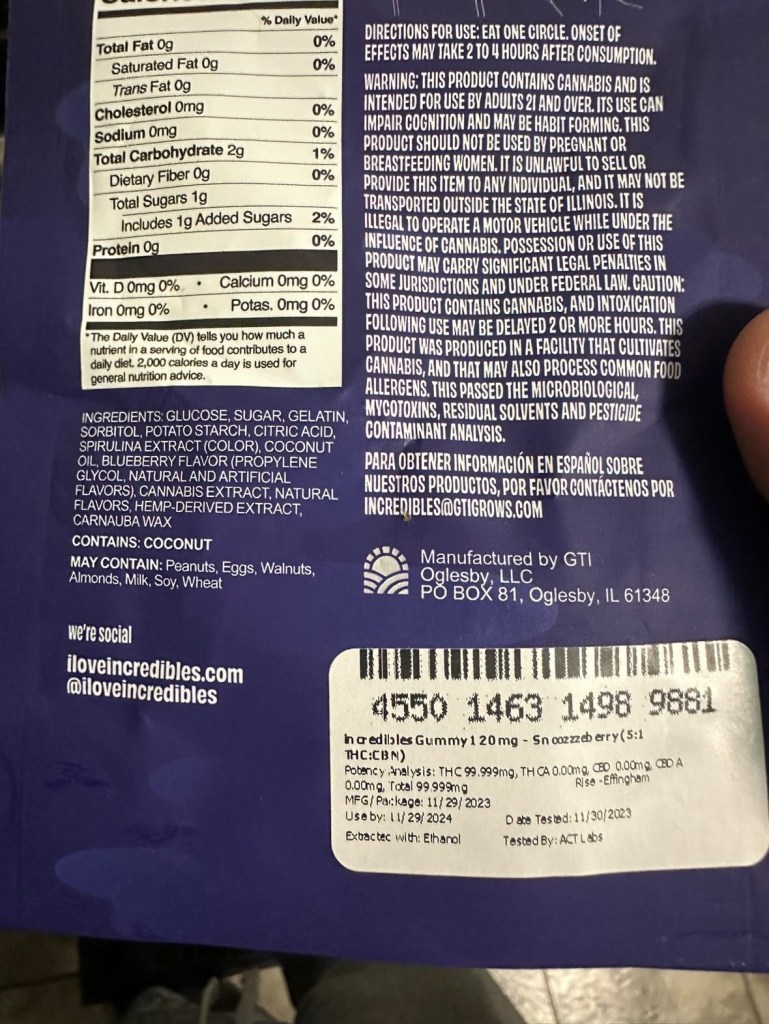
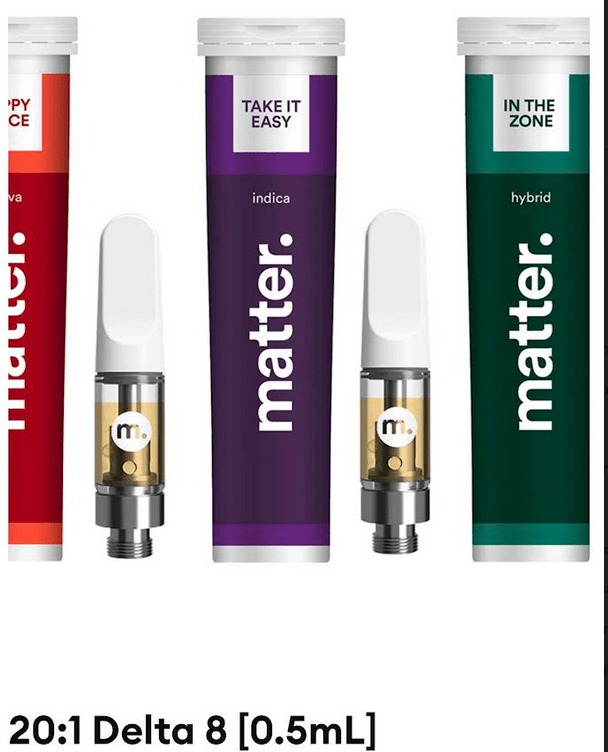
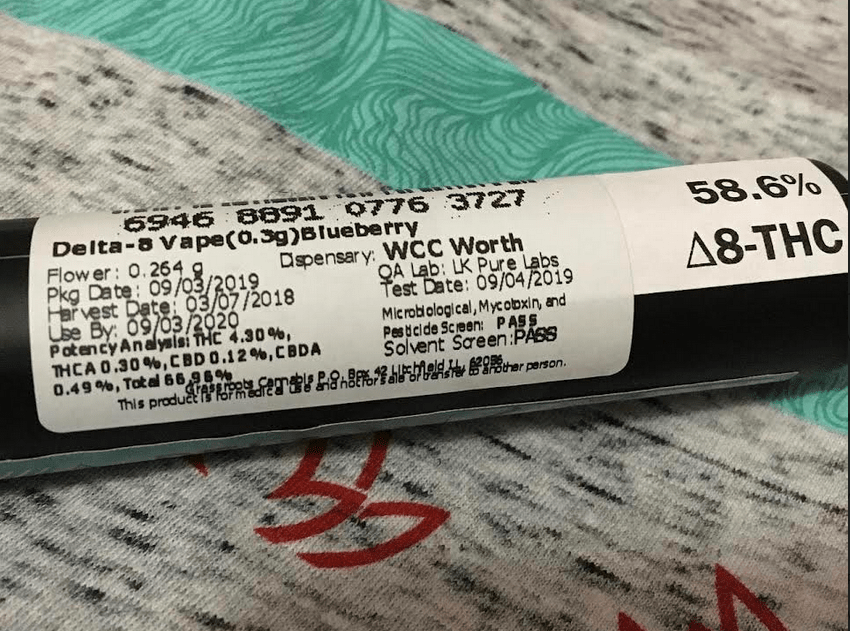
Many people say that delta-8 is only sold in gas stations. It’s important for me to share that the first time I ever consumed delta-8 was from a regulated dispensary in Illinois. Below you can see two examples of Delta-8 products that were sold in Illinois dispensaries.
To be clear, I do not enjoy delta-8 and I do not know many people that do. Still, I recognize that prohibition is a proven-failed policy. If you’re concerned about the potential dangers of delta-8 and it’s affects on our communities, then you should welcome the open-regulation of the substance.
HB4293 is not allowing for open-regulation. HB4293 is only allowing for regulation by a limited-number of state-ordained individuals(more on that below).

Undermining Social Equity?
There has been widespread discussion about hemp posing a significant challenge to our social equity licensees, with many labeling it as a “direct competitor.”
For those unfamiliar with the connection to social equity, here’s a brief overview of how Illinois defines it: social equity is primarily delineated by restricting the number of licensees. This definition becomes pertinent because hemp licensing operates on an open basis, meaning it’s accessible to all. Hemp’s unrestricted availability directly contradicts Illinois’ approach to maintaining limitations on licensing.
It appears that the state of Illinois is fundamentally opposed to fostering a more open and competitive market environment, opting instead to uphold limited participation in order to artificially sustain high prices on cannabis.
Excerpt from “Craft Growers” in Illinois Struggle to Cultivate Their Dreams
Why is the Illinois cannabis market described as “the most equity-centric in the nation”?
The CRTA is often described as “the most equity-centric in the nation” because the measure created a limited number of licenses that were supposed to be issued to those that were most impacted by the war on drugs. To put it differently, Illinois has intertwined the idea of social equity with the concept of ensuring market share for industry participants. Illinois Governor J.B. Pritzker has underscored that the limited issuance of licenses is an intentional component of the Cannabis Regulation and Tax Act (CRTA).
“We’ve been so focused on equity. Now what I mean to say is that I know that there are people that write about this that there are other states that have opened up the number of licenses to hundreds of hundreds of licensees and they have more dispensaries open than we do. But the reality is: we’ve limited the number of licensees in part because we wanted to make sure that the social equity licensees had a fair shot in the industry and they weren’t just edged out to the very end…having too many dispensaries in the market [would make it] so that people can’t make money.”
Illinois Governor J.B. Pritzker
In short, the CRTA was purposefully crafted to guarantee the financial viability of those who hold licenses in the market.
Governor Pritzker’s newly created Cannabis Regulation Oversight Office have strongly expressed their belief that states with open-licensing systems are indicative of inadequately regulated cannabis markets.
 The Cole Memo
Leave a comment